Feeds:
Posts
Comments

Archive for the ‘From Korea with love’ Category

Sights and smells

20110903-120823.jpg

Yesterday was a quiet day for Canadians at the track so we hopped on a train to the southeastern end of the country to see the ocean-side city of Busan, formerly known as Pusan.

20110903-120931.jpg

I should note that a lot of the names of communities here, both in South and North Korea I recognize from my adolescent addiction to the 70s television show M*A*S*H*. Hawkeye and crew were stationed in various North Korea towns and villages but often took R&R in the south. Television has finally added to my education!

20110903-121154.jpg

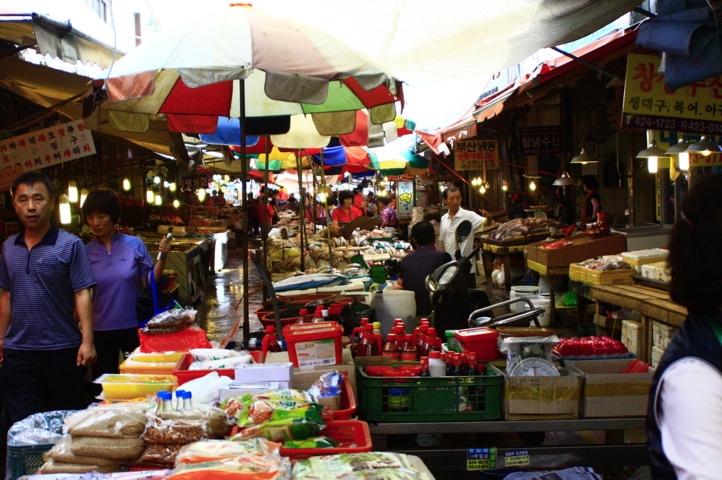
Busan is a busy city with an international flavor and a fantastic outdoor market — “You want Rolex? Is fake but automatic!” I picked up my own personal favourite, a lovely Cartier tank watch — checking the spelling to ensure it didn’t say Carter!

20110903-121349.jpg

The market was hugely organized — who’d have thought? Watches down this aisle, used clothing down another, handbags and shoes along another — myriad rabbit warren alleys — a mystery to retrace one’s steps.

20110903-121509.jpg

And a lovely little camera shop selling top of the line Canon lenses all the way down to the Tamrons and Sigmas of the world. No hard sell but a chance to try on and drool. And in my excitement of handling these gorgeous lenses I left my knapsack behind as we toddled off down the street. The shopkeeper’s wife found us a block later — poor thing was more stressed than I was. (After being continually freaked out about losing my passport on one of the dozens of trains, buses and subways we’ve boarded, I finally left it at the hotel. Hence my lackadaisical attitude, I guess…)

20110903-121435.jpg

Not a lot of bartering, incidentally. The folks know their prices and stick to them. My father so harangued one fellow over the price of a pocketknife that the man finally gave it to him. I guess he thought Dad needed it more than he did!

Read Full Post »

Brush and ink

20110902-114259.jpg

The Princess and I wandered alone through some of the older, less travelled routes of the town of Daegu. Daegu sits in the belly of Korea, a couple of train hours south of Seoul, an hour or so north of Busan which is at the water’s edge.

Daegu is all a-flutter these days because of the arrival of athletes and their retinues from all parts of the planet, in town for the IAAF World Track and Field Championships.

The city is alive with wandering mascots, giant television screens, pamphlets and information booths. Thus, sneaking away from the flag-waving, the neon, the “Come! Visit our store! Welcome!” and other sincerely friendly overtures was exactly the order of the day.

20110902-114532.jpg

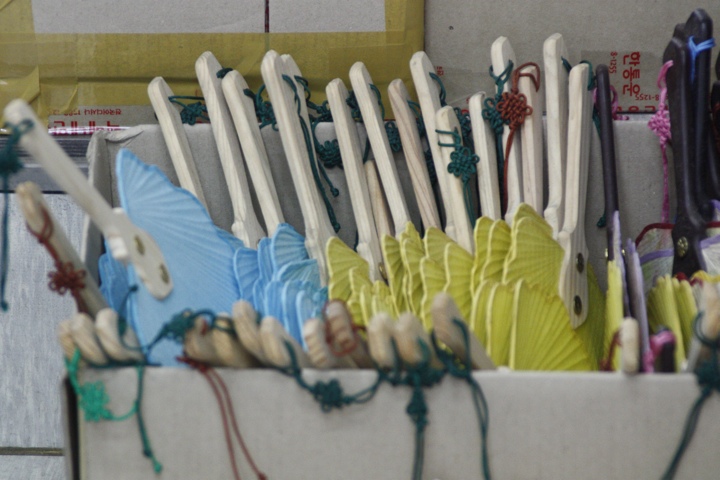
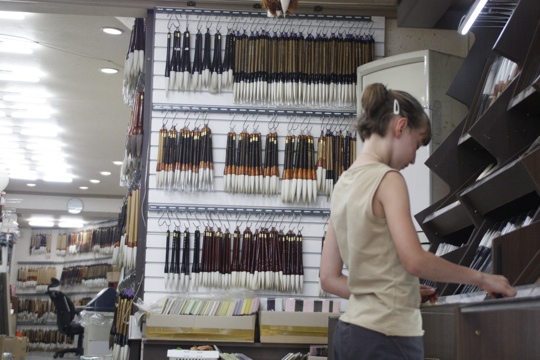
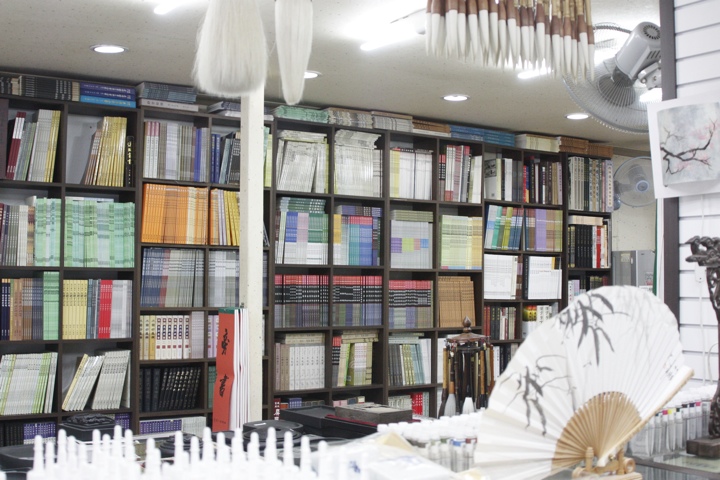
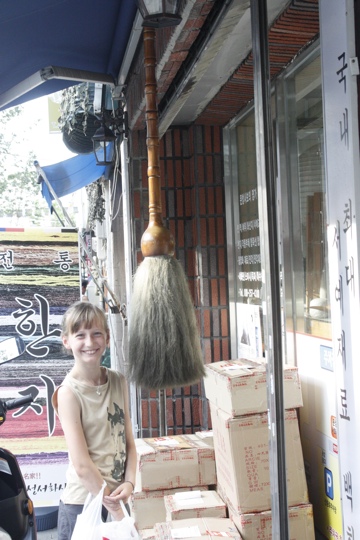
Meandering along an area marked by dusty store fronts and a few historic buildings we found a most lovely little shop, entirely devoted to the art of calligraphy.

20110902-114505.jpg

An entire shop of brushes, ink, papers, fans, and books showing styles of the great calligraphy artists of the past.

20110902-114422.jpg

As usual the shop keeper was very friendly when I requested his permission to take a few pictures. The amused smile he gave us was internationally understood to say “Fill your boots!”

20110902-114347.jpg

It is these little happenstance discoveries that make exploration so much fun!

20110831-071333.jpg

Read Full Post »

20110831-023523.jpg

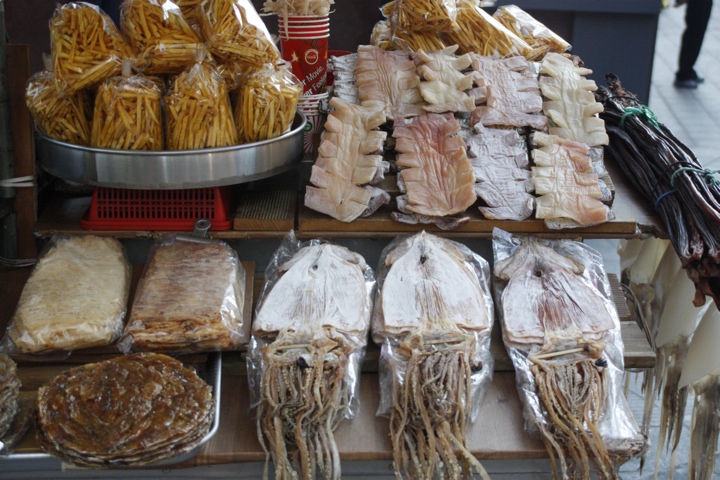
Seomun Market — bustling, hulking, multi-story complex said to have more than 4,000 shops with everything one’s little heart could desire.

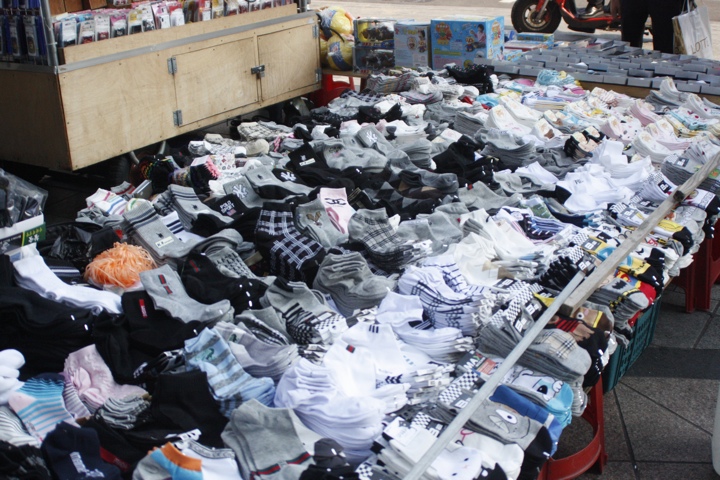
We rambled down Sock Alley and bought — socks. We bumped our way down Sewing Alley and bought — nah, nothing.

20110831-023857.jpg

It’s a busy place and yet it’s calm, orderly and quite clean clean. Plus the sights and sounds are mostly wonderful and the aromas, for the most part, agreeable. The basins of squirming eels and soft-shelled turtles, as well as the pails of blood were a bit worrisome but the little ladies were careful to hose down the walkways afterwards.

Oh, and the cages of dogs. Say no more.

20110831-024546.jpg

And, if you can get your head around this, Seomun Market has been around since 1669. Astonishing.

20110831-024803.jpg

Home again, home again,
Jiggity jig!

Read Full Post »

Help wanted

20110831-125556.jpg

20110831-125522.jpg

Hello everyone,

This is Liliana speaking.

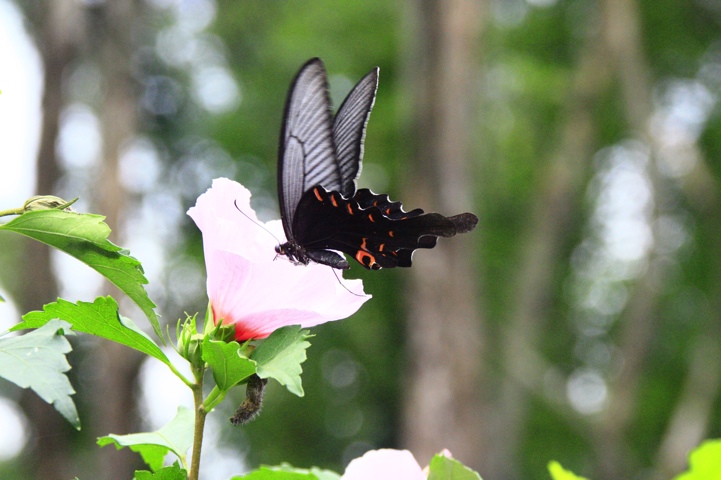
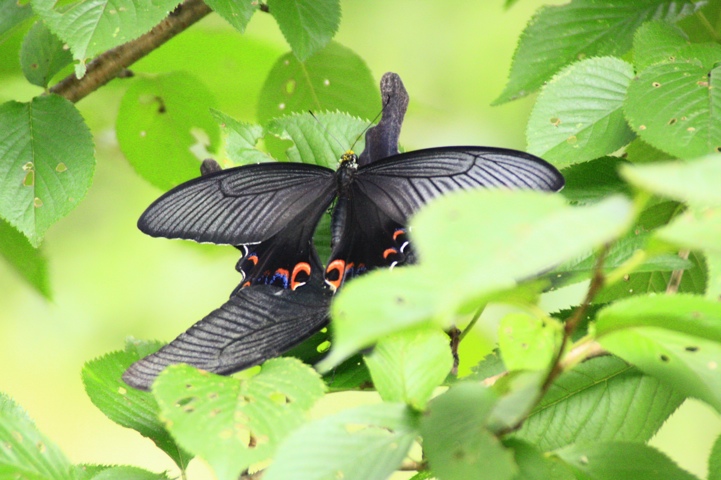
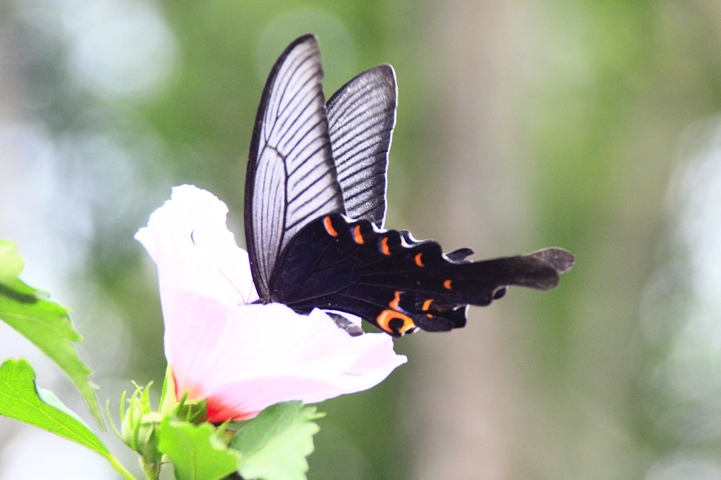
I think these butterflies are awesome.

I have no idea what they are but if somebody could find out what they are, could you write the name of the butterfly in the comments section?

We are sitting on a train now called Korail and it has a theme song that sounds like “Gumi land catch a Korail.” Most likely it’s something else but that’s what it sounds like! The song plays every time a train comes into the station so I’ve heard it many times.

That’s all for now.

Bye!

20110831-125647.jpg

Read Full Post »

Out of the dark

20110830-102041.jpg

This post is the third in a series about a weekend spent at Haein-sa Temple. I encourage you to read the two earlier posts if you’ve not already done so.

Falling asleep at nine o’clock, after tea and chit-chat with the monastery’s head monk, was actually more easily accomplished than I would have thought. Since the arrival of parenthood I’ve been plagued with near-nightly insomnia which I generally endure via podcasts through my tiny but trusty iPod.

However, this weekend being one that I wished to take somewhat seriously and sincerely, I’d bravely left the electronics in the Hotel Geumosan. I lay down on my cotton mat and closed my eyes.

I’d love to report I slept soundly til the morning gong, but not so. What I did hear at midnight was the k-k-k-k of a sliding paper screen door from a couple of rooms over. Hmmmmm. Was someone not taking the male-female separate quarters seriously? Or someone else out for a secretive tryst? Or a cigarette? Or just fetching their iPod from the car?

Thereafter I slept on and off for the next few hours until the 3 a.m. *bong* resonated through the compound. All the females in my room (we were about a dozen closely packed bodies) swiftly went through our morning routines and assembled silently outside to be greeted by the head monk.

He counted heads — all present — and off we trotted, following the wavering yellow of his flashlight. This morning ceremony was similar to that of the night before — gathering to listen to the drumming and then moving on to the main temple. What surprised me at this time was the number of people already gathered there. Easily 50 or more people at the drumming and then another 50 at the main temple — not monks but other folks who’d come for the weekend.

Three bows, some chanting, and off we went again. Remember, Dear Reader, not one of us Anglos had any idea what was going on, nor could we discuss, nor were we really even able to exchange meaningful glances — eyes cast downwards when on the temple grounds.

Off we headed down a hill, the darkness pierced only by the light of two flashlights — one from the head monk who took the lead, the other from a monk who’d appeared in the darkness to bring up the rear.

Momentarily I gazed up at the sky. When was the last time I’d seen starlight from a mountain top? I tried to recognize a few constellations from this side of the planet — I don’t think it should have mattered — but then recalling it was pitch black outside, I thought better of my astronomical observations and confined my view to the thin threads of light coming from the pair of flashlights.

Down a hill, along a flat road, then back up a hill. Had I been here before? In the darkness I could not tell.

We arrived at a ring of black granite, looking gorgeously other-worldly in the starlight. We placed our mats (taken from the temple stay hall) at intervals on this mountain crop circle and it hit me — this was it. It was time for the bows. The mythical, mystical, much maligned 108 bows.

Now, Dear Reader, these are not your ordinary President-Obama-meets-Emperor-Akihito bows. These bows are closer to burpees than they are to the music recital/bend at the waist/thanks y’all for coming bend-overs.

I’ll attempt to describe:

Stand, ankles together. Squat, knees to mat, toes curled under, palms on mat at shoulder height. Uncurl toes, torso approaches mat, elbows down, head nearly touches mat, palms turn up. Palms turn back down, push up torso, stand up from squat. Repeat.

Repeat 108 times, 1080 times if you’re a monk. The number is an auspicious one, the number of attainments the Buddha made on his way to inner truth. The number of afflictions the human heart must overcome. The number of bows one must make, in the dark, on a cool ring of black granite.

And so we began. The head monk indicated we would bow after each clap of hands made by his colleague. He clapped, we bowed, we’d stand up. Clap, bow, stand up. Clap, bow, stand up. That was three.

I counted for a while, mostly to give myself a sense of how quickly it was going. It wasn’t going quickly at all. But after a while, probably two-thirds of the way through I got into the zone and when Bow 108 finally arrived I was wearing a good sheen of perspiration but I knew I could have gone on longer. Not to 1080 bows but a while longer.

Following the bows the head monk guided us in a few stretches as we lay on our backs and gazed up at the stars. But this was not the time to relax. The night was young and very dark.

We now were directed to sit cross-legged on our mats, hands on knees and begin our contemplation, our meditation. The speakers of Korean were given some direction on how to meditate, how to count the breaths, what to do when the mind wandered and I wish mightily I’d heard how the head monk explained it.

I sat, eyes closed, enjoying the still that followed the exertion. I relaxed under the absolute openness of the universe beyond. I thought of Homeboy and the Princess, their warm bodies still asleep far from where I was now, I felt myself drifting, feeling comfortable, I heard the monk walking nearby, I opened my eyes… YIKES! There he was, bending down, looking right at my eyes to see if I was asleep. Busted! I was lucky he didn’t smack me with his stick right then and there!

He did give me a couple of pokes however, making sure my now ramrod-straight back would prevent me from drifting off anytime soon.

Dawn slowly came upon us and with it the end of our time of contemplation and essentially, the end of the weekend. Was it already 6.30 a.m.? Had we really been up for three hours?

We returned to the temple, enjoyed some breakfast, then were told tengine something to do in our 45 minutes of ‘free time.’ I slept.

At 7.30 we gathered, officially toured the temple, changed our clothes, and were done. It was 10 a.m.

I departed with a great feeling of tenderness for the young men who devote their lives to contemplation and prayer. The temple lady remarked the day before that the monks often return to the cities to see what life is like. Then they know what to pray for.

I also find it interesting that I needed three posts to transcribe alll my thoughts and observations about the weekend. If you’ve slogged along through this all, thank you very much for sticking it out. I appreciate your time and indulgence.

And from the light in me to the light in you —

*bow*

Read Full Post »

Into the night

If you’re just dropping in, I encourage you to read the previous post about the start of my weekend spent in silence at Haein-sa Temple.
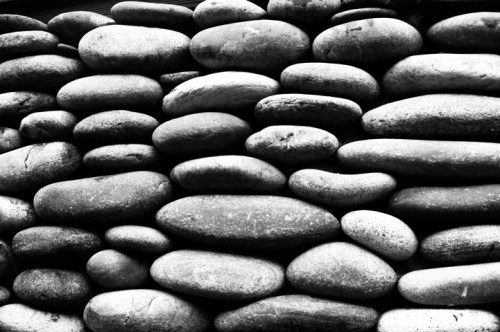
20110830-100953.jpg

Following the evening meal, the one where I was startled into gulping down the remains of my rice, kimchi, and cabbage soup, as the rest of my table mates rose to go outside, I hurried out to make sure I was not causing the entire group to be delayed.

Remember: Temple life, we were told by the English-speaking monastery lady, meant always moving together in a group, lest someone be left behind.

From the dining hall we walked single-file, in the relative darkness, to the large central square where a number of monks and lay Buddhists were gathered, coming from different corners of the compound, summoned by the sonorous *bong* of the giant brass temple bell.

That *bong,* it occurred to me, would have been such a comforting sound, whether decades or centuries ago, to the villagers many miles down the mountain side — a sound that said all was right with the world, that someone was praying for them, for their crops, for the safety and harmony of their community, for the greater good of people everywhere.

Following the bell a series of young — and one had to be young for the energy and stamina required — monks who hammered out lengthy staccato rhythms with sticks on giant cow-hide covered wooden drums. The monks beat at the drums with powerful and energetic patterns, usually starting slowly then increasing the speed of the repetitions.

On and on the hammering went, rhythmic, too loud to be hypnotic, complex and too ordered to be random.

The head monk signalled again and up the stone steps we walked to the main temple hall. Inside, much of what you would recognize from other temples you’ve seen or, if not, from typical images of Buddhist temples: A large tall-ceilinged room with wooden floors, a massive altar at the front, three gold-leafed statues of the Buddha in repose.

Some flowers, some offerings of rice and beans, stacks of books for reading the prayers during chanting.

A few monks were already seated on the floor, facing the altar, chanting the prayers. Reminded me of a monastery I visited in Mission, B.C. where the monks sang Gregorian chants, again in unison. Very pretty.

A number of people were already seated there, waiting for the evening ceremony to begin.

We collected cushions from the back of the temple then were directed to bow three times, then to sit, rather close to the altar.

In all of these group experiences, we were treated very much as participants, not simply observers. We moved to the front of the crowd at the drumming ceremony, we sat at the front of the crowd in the temple, we ate at a table at the front of the dining hall. Any thought that this whole experience was put on for the sake of a visitor was simply not true.

And, every weekend many people do come to participate in what they call a ‘temple stay.’ Koreans will leave their busy stressful lives behind in the city and make a weekend pilgrimage to a mountain monastery.

So we sat in the temple for a while — and truly, I can’t say how long these events lasted. I was wearing a watch but as I was consciously at the temple for the whole experience, never thought to look. Was it a few minutes? Half an hour? Longer? I have no idea.

The monk indicated we were to leave so we returned our cushions to the back, bowed to the altar, and lined up in dusk.

Off we filed again, this time ending up in the small hall where we’d had our initial greeting ceremony. We Anglos (plus, mysteriously, a young Korean couple) were moved into one room and the rest of the group into another.

The head monk was with us. Hmmmmm.

He moved a low wheeled table to the centre of the room and we all collected our cushions to sit in straight rows as we’d done in the welcoming ceremony. No, no, that wasn’t what he wanted. He gestured, we fumbled, he gestured some more, “Circle! Circle!” except you know very well what he said didn’t sound at all like “circle.”

We finally (and with some embarrassment — I mean, who wants to frustrate a monk?) determined he wanted us in a semi-circle with him and his little table at the front.

He then proceeded to make tea (yes, with an electric kettle) in a large bowl which he poured into a another bowl with a spout and then passed the bowl to us so that we’d each have a small cup of tea.

Tea with the head monk. Fairly high on the cool factor.

Then, via the sweet little monastery lady, he indicated we could ask him questions. Questions? Fair to say we all gulped. And not just any questions, she said. They had to be personal questions. Personal questions? Of the head monk?

Anyway, the question and answer period started and he was very sweet, rather funny, extremely gentle and even via translation, illuminating and elucidating.

He talked about the bowing, for example. The statues of the Buddha were just that — statues. Wooden, empty. And the Buddha was just a person, not a god. So when we bowed we were bowing to the self, the commonality bond between all people, the unity that we have as people seeking an inner truth.

As one monk told me the next day, “Strictly speaking, Buddhism is not a religion.” Which I knew but was so very interesting coming from a monk.

When it was my chance to ask the head monk a question (and I actually did ask him quite a few; chalk it up to being the oldest in the crowd) I asked him what was most challenging for him after his many years of practice.

His answer was immediate: “Patience.”

Such a tenderly human flaw.

And the evening carried on until at 8.30 — was it only 8.30? — he told us it was time for us to go to bed.

Because we needed our sleep. You’ll recall, Dear Reader, we’ll be rising at 3 a.m. and certainly don’t want to be nodding off.

And as his final gesture of the night, we all received two swift smacks across the back with a long and flat bamboo stick — not particularly painful — the intent of which was, “Now, while you’re thinking about the sting, you’ll have time to think about what I’ve told you.” And then we bowed to thank him for the smack, and he bowed to thank us for letting him be our teacher.

An evening with the head monk. Seriously high on the cool factor.

***

Next post I’ll tell you about waking up before dawn has even rolled over.

*bow*

Read Full Post »
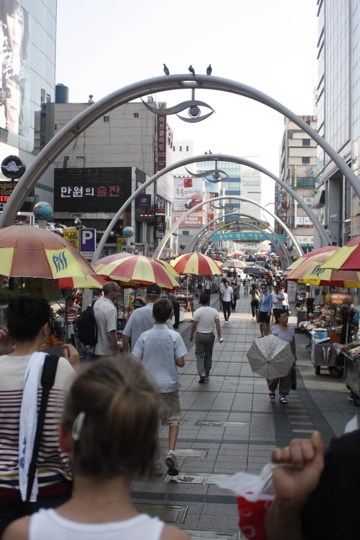
Walking forward

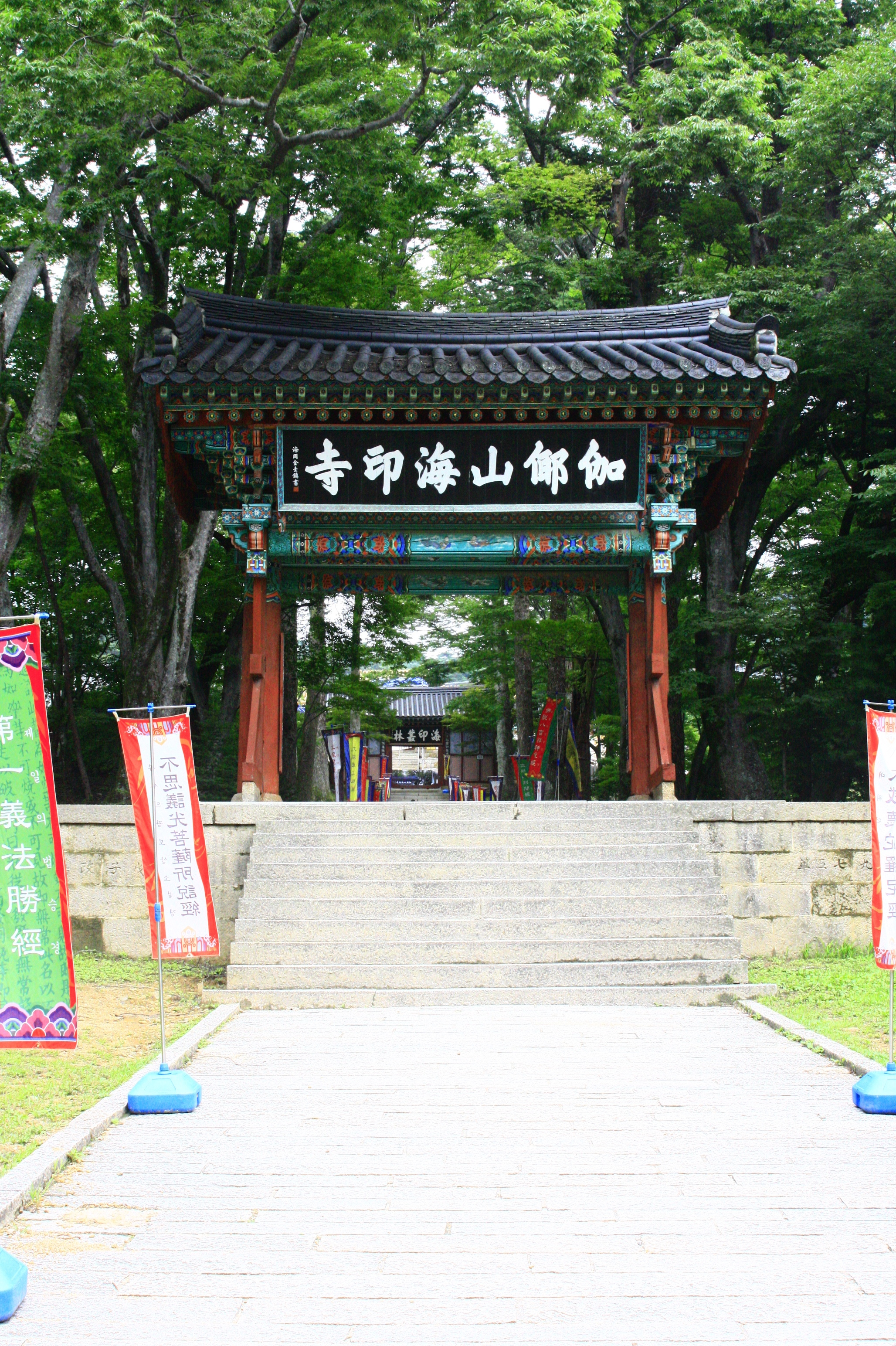
On the approach up the stone steps to Haein-sa Temple, a walkway guides visitors through a series of gates, one of them called The Gate of Nirvana. I don’t believe I found it.

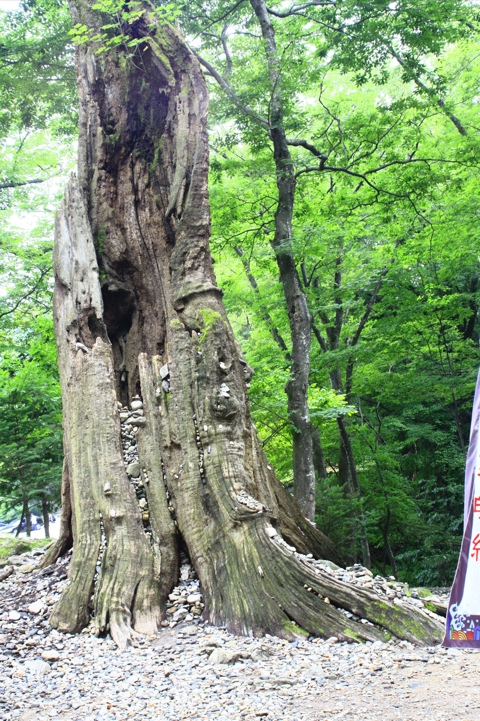
Lining the walkway are a series of trees, some in substantially more vigourous shape than their neighbours.

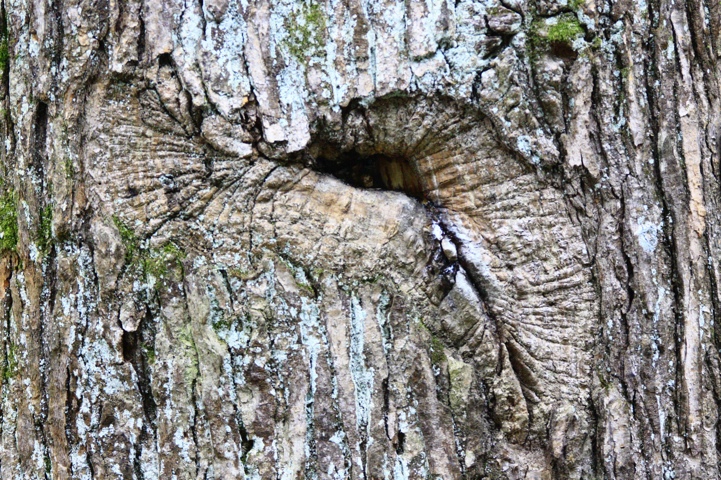
The story behind this withered fellow is that it was planted 1,200 years ago to commemorate the founding of the temple where it grew until its well-earned old age in 1945.

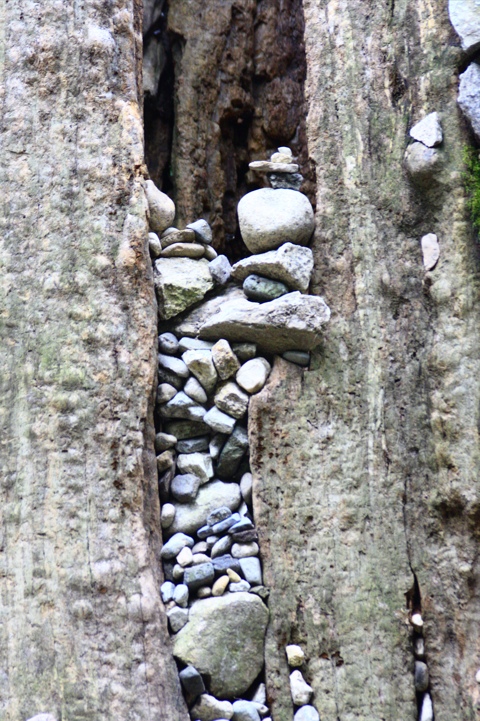
As a gesture of respect, I suppose, passers-by press pebbles into its corrugated exterior.

20110827-075243.jpg

20110827-075301.jpg

20110827-075315.jpg

20110827-075331.jpg

20110827-075348.jpg

20110827-075401.jpg

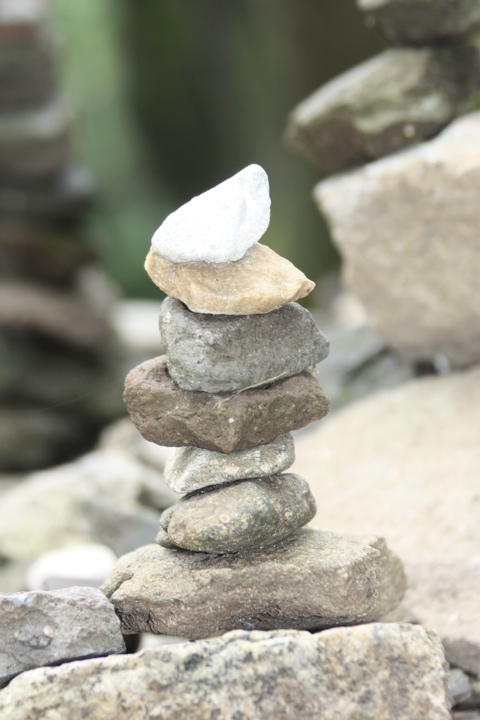
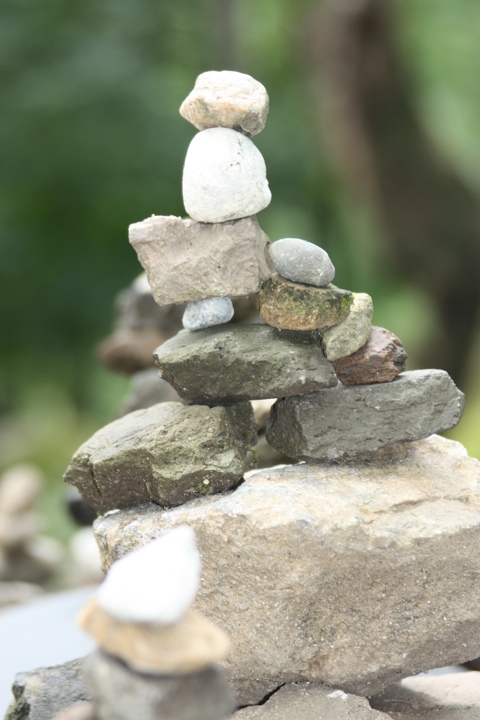
Other little piles of rock wait, inukshuk-style, gestures of time slowed, even for the few moments required to balance one stone atop another.

20110827-075921.jpg

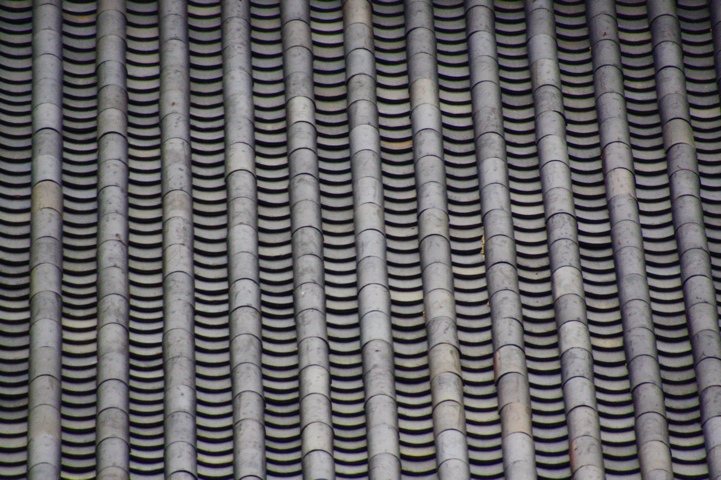
And a final meditative pattern — clay tiles.

Complexity in simplicity. Simplicity in complexity.

Maybe I found the Nirvana Gate after all.

Read Full Post »
Haein-sa Temple

Away way way up the mountainsides in the foothills of rural Korea perch many an active Buddhist temple.

By active I mean these are not simply shrines but rather are working temples, filled with the busy lives of monks and lay Buddhists, keeping simple uncluttered lives of prayer juxtaposed with the reality of computers, calculators and the other essential modern devices that keep their mountaintop monasteries running.

This morning we headed up to one such temple about three hours total travel (taxi, train, subway, bus) from the hotel, where we ambled somewhat aimlessly but surrounded by so much simple and complex beauty.

Probably the most perfect moment of the day was at about two o’clock in the afternoon when the monks glided to various temple sites and began rhythmically tapping with a stick on a hollow gourd, while chanting. One fellow sang at points — softly, perfectly pitched, absolutely otherworldly. It was the kind of moment that beckons one to just

stop

be

let go.

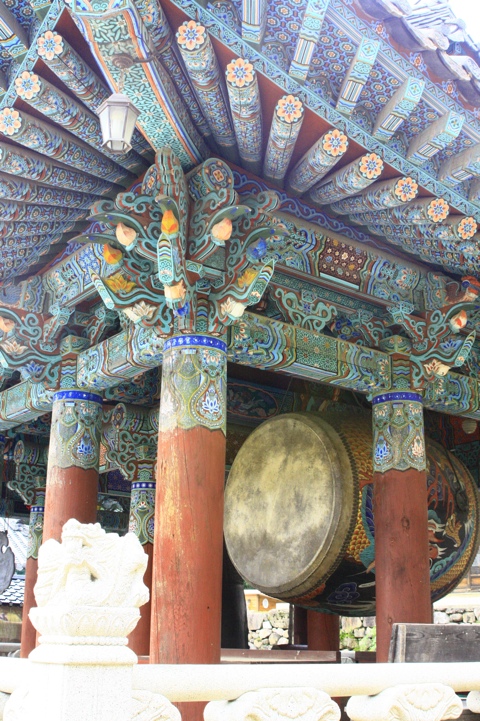
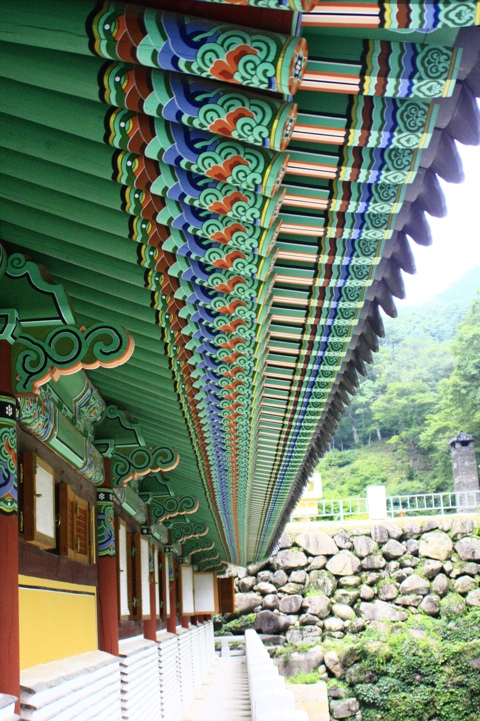
And lest I talk too much and spoil the moment, I’ll leave you with some pics and will expound on another day.

20110826-085048.jpg

20110826-085109.jpg

20110826-085121.jpg

20110826-085140.jpg

20110826-085157.jpg

20110826-085231.jpg

20110826-085248.jpg

20110826-085332.jpg

Read Full Post »
Market Day

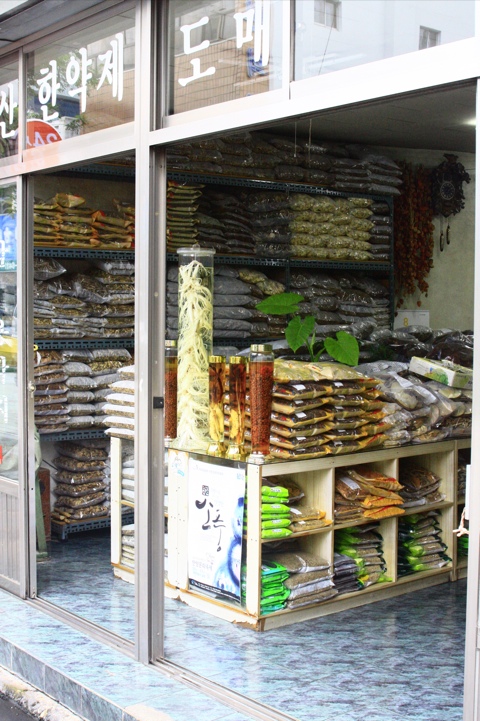
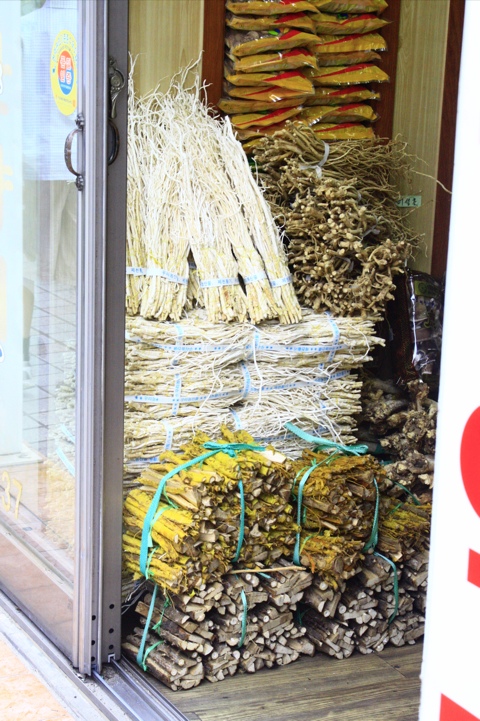
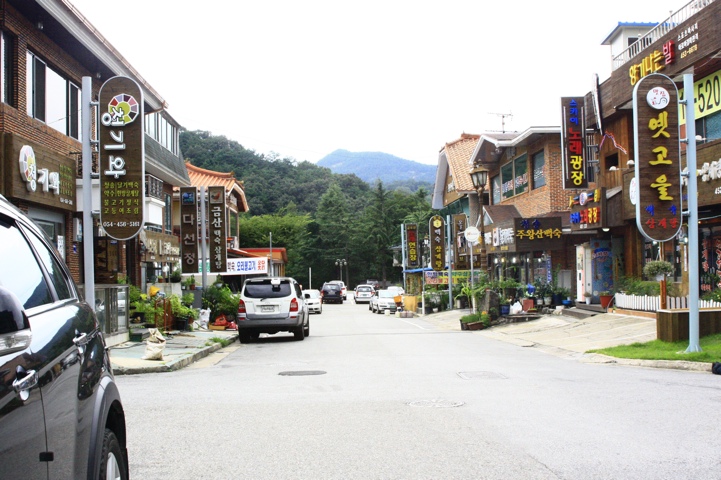
For about 800 metres along this quiet street, one can see and smell the ancient medicines still for sale in Daegu’s traditional-medicine market.

Roots the size of human thighs, jars of honey-coloured liquids, baskets of flowers, dried leaves and herbs sold by equally wizened merchants beckon buyers to these little shops.

Easily more than 100 of these shops are crammed cheek by jowl, all selling what appears to be the same items. Clearly the shopkeepers must distinguish themselves from one another but such distinctions are lost on the anglophones!

The aroma of something resembling like licorice root is what I noticed the most, followed by the humanoid forms of the dried and bottled ginseng root.

Most attractive, however, is the uniformity of the presentation and the obvious care taken in assembling the bundles and jars of dried plants, critters, antlers and powdered mysteries.

20110826-112625.jpg

20110826-112648.jpg

20110826-112702.jpg

20110826-112729.jpg

20110826-112754.jpg

Read Full Post »
Confession

I have a confession: I never read travel books. I don’t like Condé Nast. I can *just* make it through a National Geographic. Forget the weekend travel section.

Can’t do it. Want to be there. Doesn’t matter where — just want to be where the picture-taker is standing. Want to be there so badly it aches. Wah!

But I know I may be alone.

Therefore, for those of you who do NOT suffer from my affliction, I present a few photos from yesterday’s walkabout in order to give you a taste of what the little Gumi countryside looks like. Just a flavour.

Homeboy and I were talking about the next greatest technological invention and we decided it would be, more tastefully named, of course, smell-o-vision.

So it’s not smell-o-vision but it’s the best I can do in the “wishing you were here” department.

20110824-081114.jpg

20110824-081158.jpg

20110824-081224.jpg

20110824-081242.jpg

20110824-081259.jpg

20110824-081354.jpg

20110824-081410.jpg

20110824-081434.jpg

20110824-081455.jpg

20110824-081546.jpg

20110824-081600.jpg

Oh — and this last man — BLESS HIM!! He said the Princess looked like me!!

Read Full Post »
« Newer Posts - Older Posts »