Feeds:
Posts
Comments

Culture stop

20110922-124449.jpg

Much as I love my home country, I always enjoy the ease of public transport in slightly more crowded lands. We easily hopped a train from Ballarat to Melbourne (children ride free during school hours — oops!).

20110922-124501.jpg

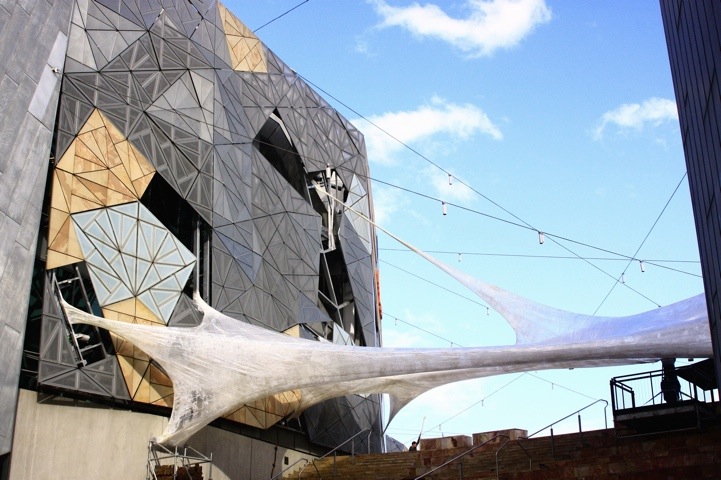
After hurting through the countryside for about 90 minutes the train spat us out at a large public space called Federation Square, a series of public buildings housing, among many attractive spaces, a large collection of modern Australian aboriginal art.

20110922-124620.jpg

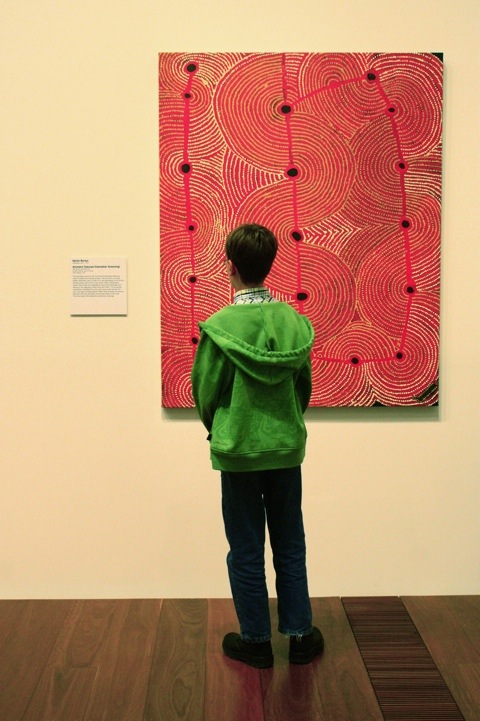
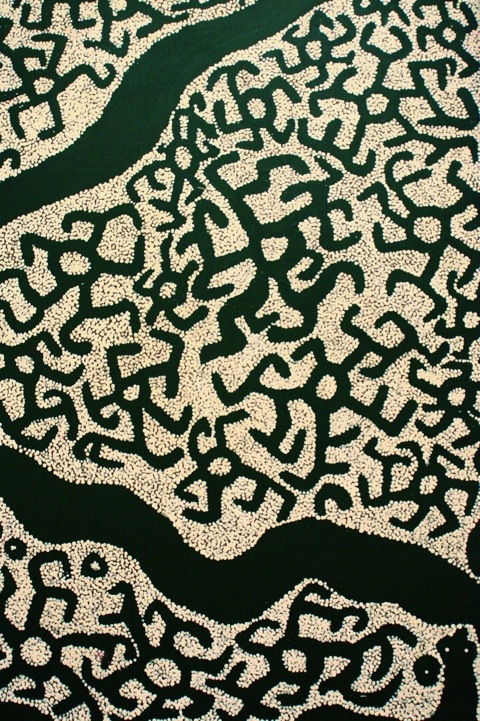
These ‘dream paintings’ typically portray the origin stories of the ancestors, although some modern day artists also use their paintings to continue ancestral stories of music, rock art and body art.

20110922-124649.jpg

The work is typically painted on the floor and some of the work was displayed horizontally — a different perspective for sure.

20110922-124704.jpg

The paintings are often aerial views of an area. At the entrance to the gallery was a series of slides of paintings and aerial landscape shots. Sme of them were shown in a transparent overlay — the accuracy was remarkable!

href=”https://thecountrymice.com/wp-content/uploads/2011/09/20110922-124723.jpg”>20110922-124723.jpg

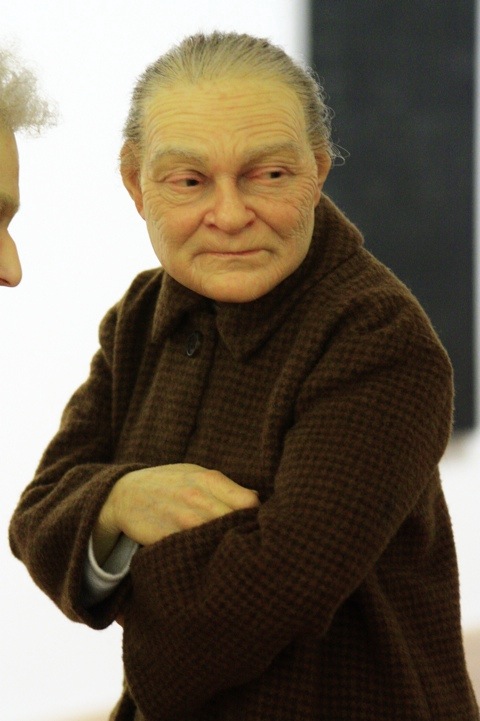
A pair of elderly ladies on the gallery’s top floor didn’t seem too happy to hear us chatting about the art in such enthusiastic tones.

20110922-124733.jpg

<a

So we gave them their own space.

Cranky old ducks.

Long ago and far away

20110922-103828.jpg

*tap*

*tap*

Anybody there?

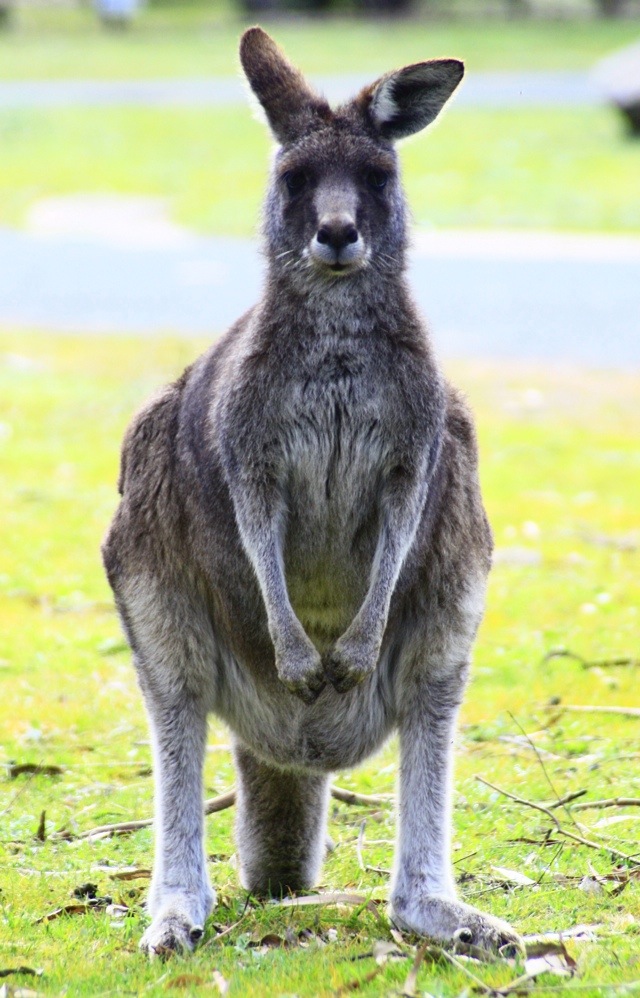
Forgive my long absence, dear reader, as I have just emerged from the land of Down Under, the place of kangaroos, kookaburras, Vegemite and more, a land of friendly forthright citizens and a place where the wireless computer connection is as elusive as the eucalyptus-munching koala.

And please pronounce that ko-WAH-la, mate. None of your fancy ko-AW-la business.

I will endeavor to fill you in on our 10 days adventures while I also share what I hope will be many posts on the final leg of our journey in the south of France.

Four cousins and a monkey

20110916-114750.jpg

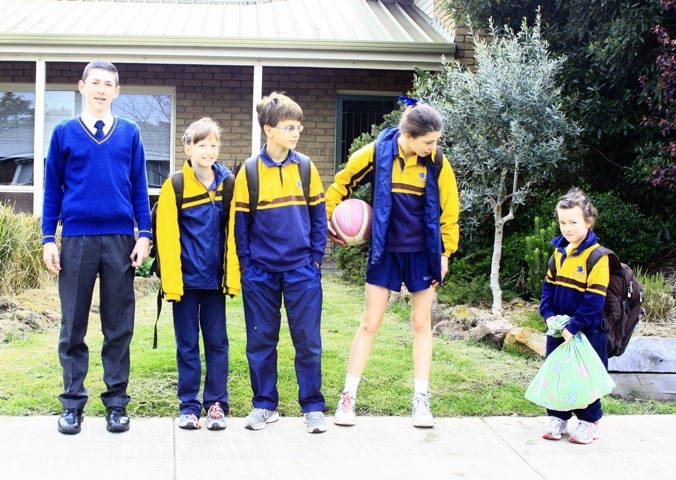
On their first day in the land of Oz the children blurred through the blues and yellows of school clothing, en route to share in a day of schooling down under.

On his return, Homeboy remarked that the day had not been “very exciting.” The comment is either credit to his Island school or it’s been too long since he was in class!

The charmer

20110912-021238.jpg

Doesn’t matter where he is, where he goes, what he’s doing…

He can always get a smile from the ladies.

My dad.

Simply grand

20110910-121306.jpg

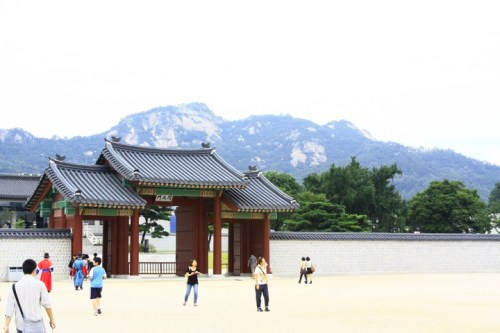
If I traipsed past a fourteenth century castle on my way to the grocery store would I still gaze in awe? Would the changing of the palace guard cease to thrill and instead become dull and mundane? Would the interminable bus loads of goggling tourists and the incessant chatter of schoolchildren drive me a bit mad? I suppose it’s easy to take for granted even the most spectacular of urban nuclei, tho this mid-city castle is hard to ignore.
20110910-121339.jpg

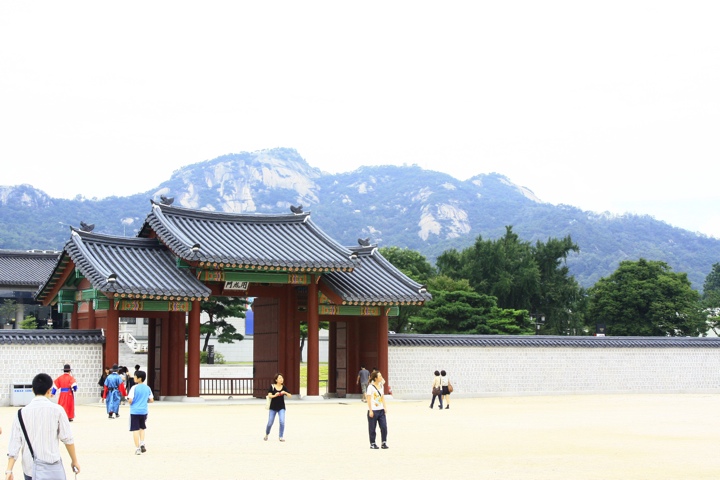
Gyeongbokgung Palace, deep in the heart of Seoul, soared to its zenith in the mid-1400s, largely due to the vision of the monarch at the time, King Jeongjo. No idle ruler, he created a writing system for the Korean language (called Hangeul) which allowed his citizens to build words in the same way as our alphabet, abandoning the need to commit to memory thousands of Chinese characters.

I didn’t get the chance to research (yet) but I wonder if historical literacy rates are consequently higher in Korea than in China.
20110910-121405.jpg

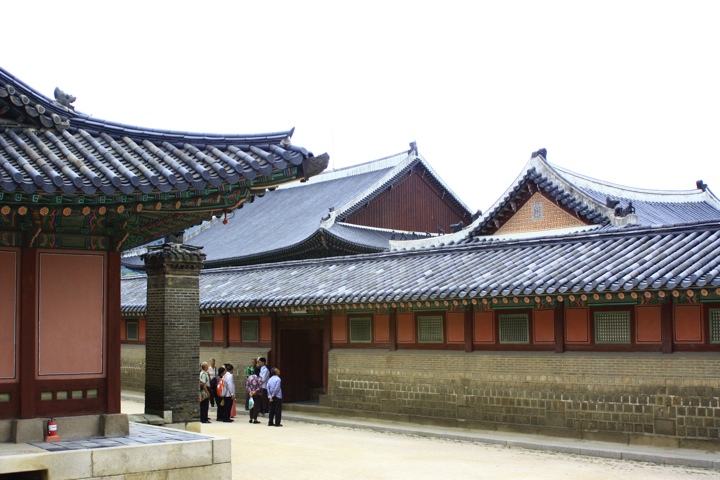
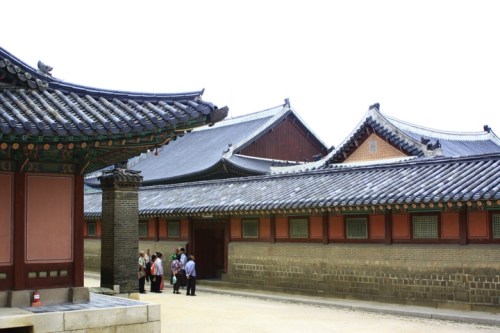
The main palace compound served as both residence for king and family and as the meeting place for palace and foreign business discussions. Walking through the compound was a bit like the opening credits of the Get Smart tv show: Door upon door in a never ending sequence, tho here it was archways and inner layers of courtyards and more buildings.

The layers of inner and outer courtyards are quite symmetrical and the courtyard walls form perfect squares aligned with the points of a compass. Quite amazing.

I read that the buildings were sited according to Confucian values of propriety and virtue.

Obviously something was successful as the whole place has a feeling of being stately rather than overbearing.

20110910-121426.jpg

Late in the 1500s the original palace was destroyed by the Japanese and the site remained vacant for 273 years! (Gives me hope for some of the demolished-buildings-turned-empty-lots in Winnipeg…) During the reign of another king, Gojong, the compound was rebuilt and expanded.

As Korea lost so many of its significant structures to one battle or another, the various modern-day presidents seem committed to restoring to their original state a large number of palaces, temples, stupas and pagodas.

And the emphasis is on restoration — excavating to the original foundation and endeavoring to replicate the originals as closely as possible. Korea records and numbers these ‘national treasures’ — some research on my return will tell me how many there are.

20110910-121625.jpg

When we first walked through the palace gates I told my two free-range children that living in a compound such as this often meant rarely leaving for one’s entire life, especially if one were female. As we wandered though the many buildings it became clearer to us all that this was more like an enclosed village — more than 3,000 royal family members and their servants lived inside the palace walls at one time — and with a few more acres, not so different from living on an island in the Pacific Ocean!
20110910-121647.jpg

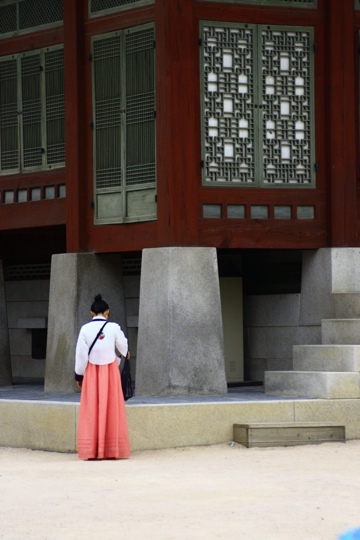
And while Seoul traffic bustles its way around the outer confines of the palace, the serenity inside the walls of the palace is not too hard to imagine.
20110910-121824.jpg

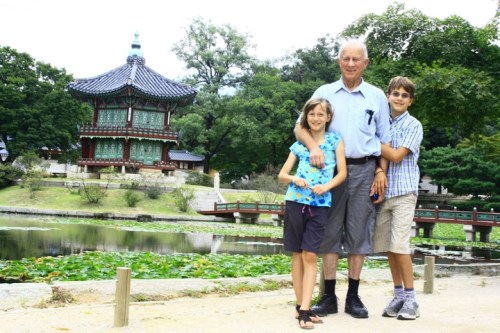
King Jeongjo is quoted as saying, “I read books in my spare time, away from the 10,000 things I must do.”

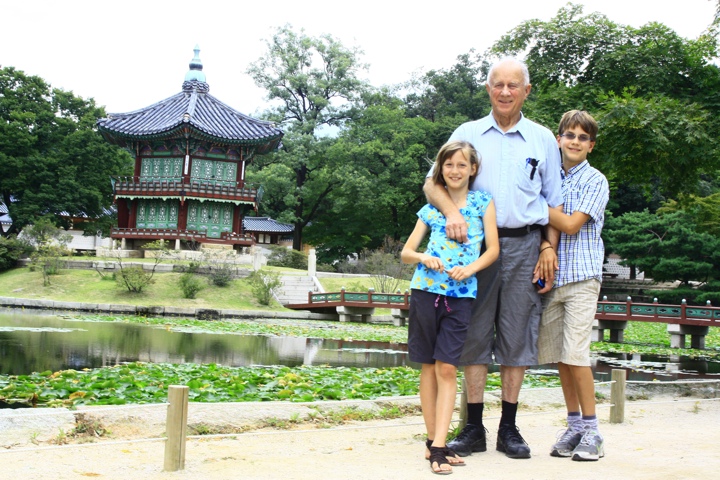
And so he built, among other secluded spots, this pavilion, where he and his family would retreat from their official obligations.

We were pleased to see the aura of calm remains still!
Village in the city

20110910-104648.jpg

Tucked into the heart of Seoul, near the Gyeongbokgung Palace is the little village of Bukchon.

20110910-104951.jpg

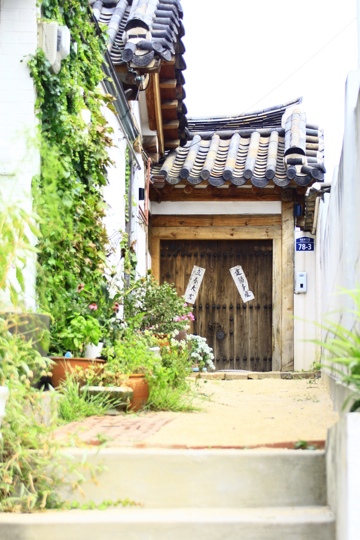
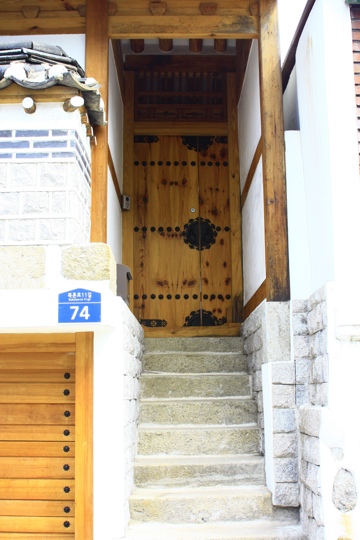
A few winding streets, on a small hill above trendy coffee shops and art galleries, are home to about 900 hanok, traditional Korean homes.

20110910-105035.jpg

20110910-104812.jpg

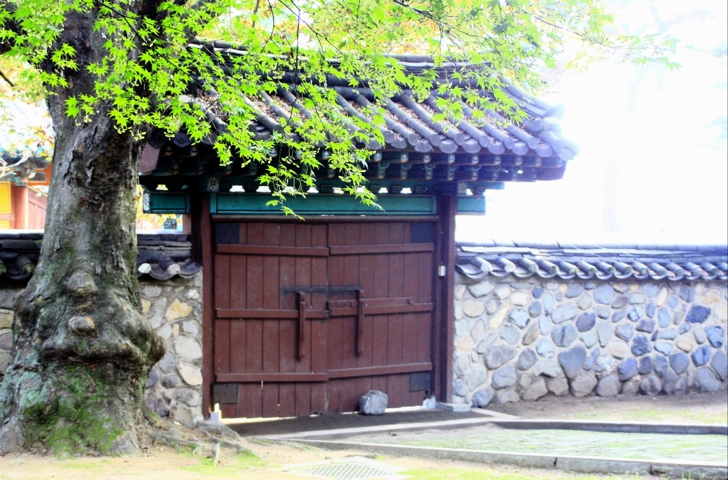
The hanok are built from wood, stone and plaster and have tiled roofs (thatched if they were peasant-class). Behind the surrounding them is a courtyard providing ventilation and light to the surrounding rooms.

20110910-104848.jpg

Increasingly, hanok are disappearing as the predominant view among Koreans is that such traditional houses are an anachronism in their modern country, unworthy of preserving.

20110910-105059.jpg

The area we discovered in Seoul is increasingly a tourist destination but it’s worth the wander to get a sense of the twisting streets and admire the ancient details contrasted with the modern city panorama.

National Pride

20110908-094756.jpg

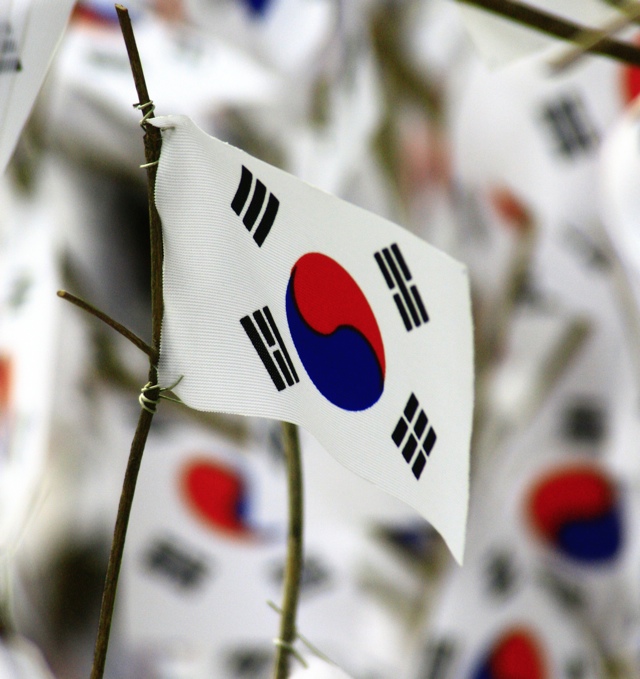
The Korean flag is called taegeuki (tah-eh-ge-oo-kee).

The entire design symbolizes the forces of yin and yang — balance and harmony.

The centre circle is divided into two equal parts — the red represents the proactive cosmic forces of the yang and the blue represents the responsive cosmic forces of the yin.

The two forces are always moving and achieve balance and harmony throughout infinity.

The black lines in each corner represent the four universal elements. I’ll try to imitate with colons representing the broken lines.

Heaven – III
Earth – :::
Fire – l:l
Water – :l:

Balance and harmony with the forces of nature.

Sounds like a temple experience all wrapped up in a flag!

A peaceful resting place

20110907-095351.jpg

In the previous post about the areas of Gyeongju, I mentioned that this area holds a lot of historic Korean relics — palaces, padogas and sustaining examples of architecture from the Shilla period of just about a millennium ago.

20110907-095336.jpg

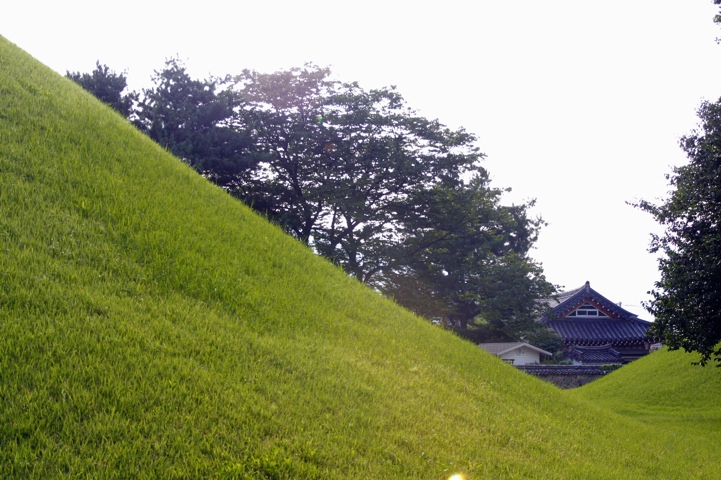
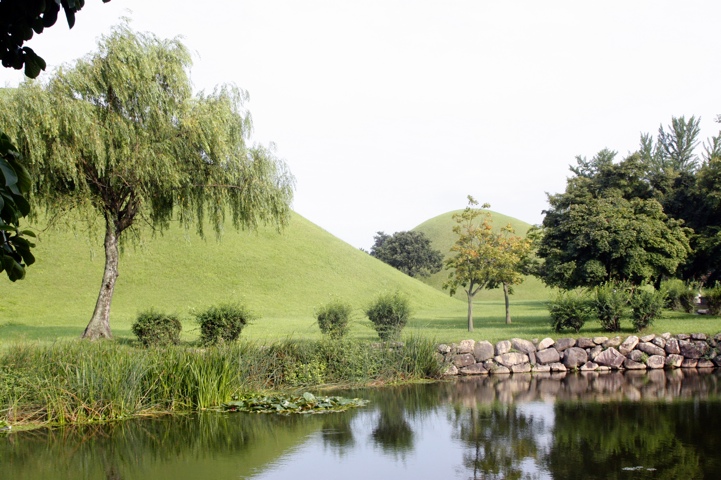
Right in the central part of the city of Gyeongju, about the size of any city’s central park — Winnipeg’s Assiniboine Park, Vancouver’s Stanley Park or Toronto’s High Park, for example — is a massive massive green space that looks like something from the introductory scenes of Teletubbies (if anyone else remembers back that far) — great grassy hills of green.

20110907-095407.jpg

These ictures won’t do them justice but if you can imagine an enormous green pasture, bubbled up in spots, you’ll get the general idea.

20110907-095425.jpg

The domes are similar in purpose to the Egytian pyramids — giant place markers for deceased nobility.

20110907-095435.jpg

One of the tombs, Cheonmachong, is called Heavenly Horse Tomb. It’s open to visitors and a cross-section display shows its construction.

After the death of the worthy nobleman or -woman, the person was placed in a wooden coffin inside a wooden box, along with crowns, jade jewelry, pottery, weaponry and other items that might be needed in the afterlife. In this particular tomb was found a saddle with a horse painted on its wooden back — hence its name, Heavenly Horse Tomb.

20110907-095446.jpg

The park has a serene peaceful quality; a nice place to spend eternity!

English lesson

20110907-074451.jpg

Pronunciation guide included.

Surrounded by the past

20110907-084226.jpg

20110907-084253.jpg

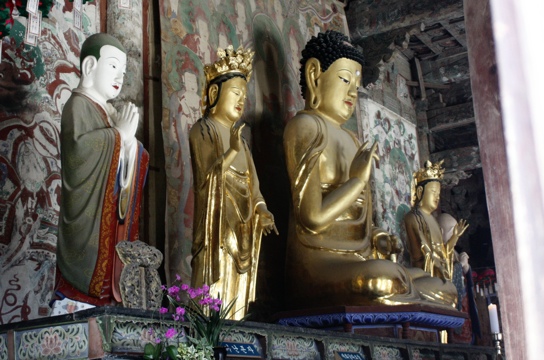
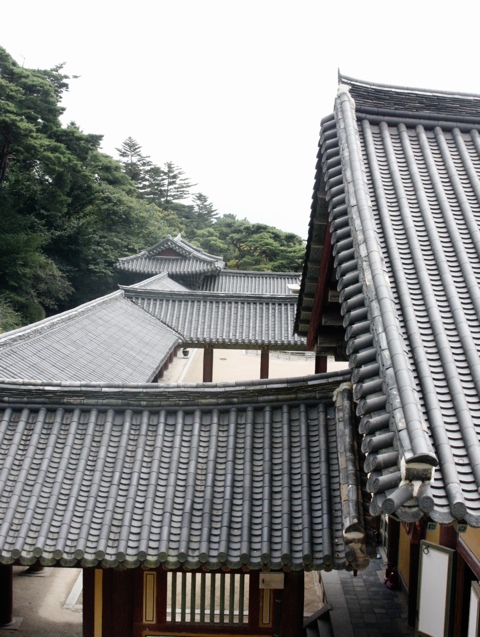
Gyeongju, a region about an hour’s train ride from where we’re staying, is referred to as “the museum without walls,” and indeed, in just a couple of metro bus rides, we saw a condensed collection of tombs, temples, pagodas — sadly missing the palace ruins, Buddhist statuary and rock carvings — in a single day.

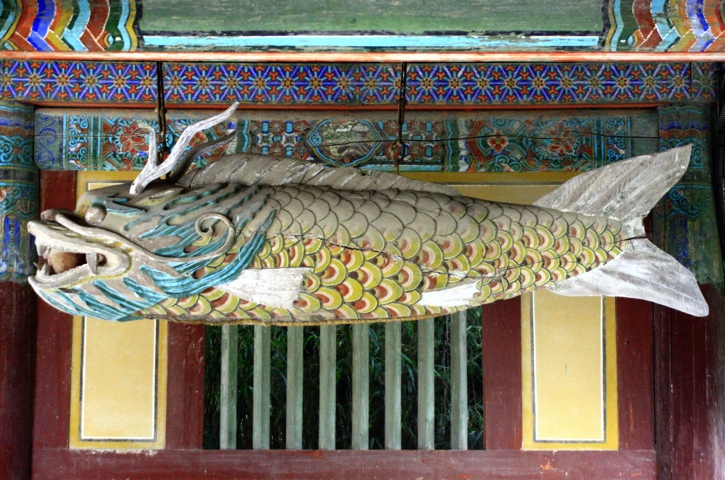
This dragon’s head greets visitors immediately upon entering the main temple grounds. I thought it had the feel of Thai design and later was surprised to see a Thai-influenced statue of the Buddha. I don’t know if the coincidence is accidental but no doubt there would have been common influences.

The wooden fish, I learned after my weekend in Haein-sa, is rattled with a stick from the inside, to call people to prayer.

20110907-084306.jpg

20110907-084556.jpg

To put the timeline into perspective, about 57 BC, when Julius Caesar was subduing Gaul, this area of Gyeongu was the capital of the Shilla dynasty, and remained the capital for about 1,000 years until it eventually fell victim to fighting from within and invasion from without.

This pagoda is considered such a shining example of Shilla architecture that a replica sits outside the government buildings in Seoul.

20110907-084623.jpg

20110907-084636.jpg

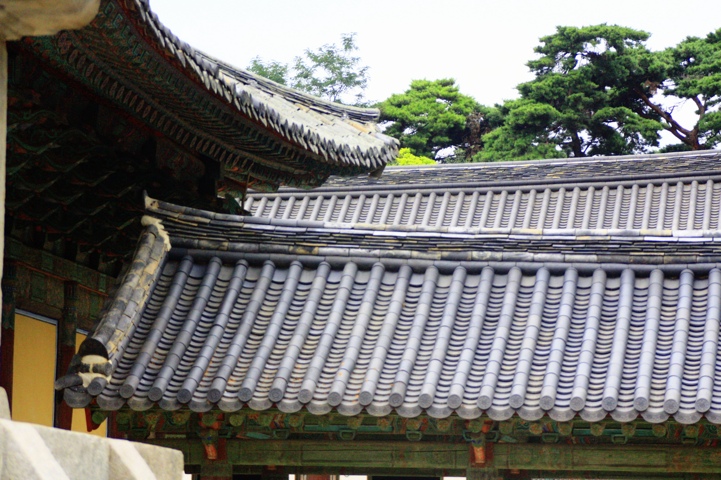
Bulguk-sa temple represents well the architecture of the Shilla period as some of it was spared from Japanese bombing (a sensitive topic throughout Korea).

20110907-084650.jpg

20110907-084704.jpg

The approach to the temple includes crossing a bridge that has 33 steps — representing the 33 stages to enlightenment…

It’s very kind that we have so many opportunities to practice our routes to enlightenment and Nirvana — I suspect I need more time!

20110907-084720.jpg

20110907-084732.jpg

20110907-084744.jpg

20110907-084756.jpg

20110907-084813.jpg

I’m so glad to traveling with my faithful companion!