Feeds:
Posts
Comments

Creepy Japan

Rick Newton and I taught English in neighbouring Japanese villages in the early 1990s. Following our tenure overseas, Rick returned to his home in Alabama where he now practices law, imports Japanese antiquities, and more recently, provides personalized tours of the traveller’s Japan.

Here Rick shares some particularly gory and grossed-out tales of ghostly Japan, in a charming intro to the last week of October.

In October 1990 I was living in a small mountain town in Hyogo Prefecture.  I write about this town in the stories “Etsuko” and “Enlightenment” (LetsJapan).

I was a middle school teacher.  It occurred to me that in the spirit of cultural outreach I should find a pumpkin and carve a Jack O’Lantern for and with the students.  My Japanese counterpart teachers (of English) liked the idea and a big pumpkin was found without much trouble.  I carved it in stages, in a hallway, throughout the school day as students gathered around, amazed.  When, towards the end of the day, the job was done and the candle was lit and placed just so in Jack’s now-empty skull, I gave a signal and the lights were extinguished in the hall.  Gasps rippled up and down the flock of students nearby.  They had never seen such a thing.

While that wasn’t that long ago, it was long ago enough:  Hallowe’en — with its origins dating back well more than a millennium with the Celts of Northern France and the British Isles, brought to America in fits and starts during the 1700s, popularized by Irish immigrants during the latter half of the 19th Century, and supremely commercialized in the States after WWII — is now a Japanese holiday, in the strictly commercial, kitschy sense.

"The Ghost of Koheiji".  Woodblock print.  Hokusai.  1830.

The Ghost of Koheiji, 1830

But ghosts and goblins have their own long tradition in Japan (as is the case in every culture).  Celebrated Edo Period wood block artist Hokusai (1760-1849) created a series of Kabuki-inspired “ghost story” prints around 1830, Hyaku Monogatari.

Above, the print The Ghost of Koheiji is based on an 1803 story-turned-kabuki-play by Santo Kyoden.

Koheiji was betrayed and murdered by his wife. So, naturally, he comes back from the dead to torment her and her lover by slipping under the mosquito netting around their bedding and joining and doling out horrific justice on them.

Below is one of the most famous, The Ghost of O-Iwa,  a woman murdered by her husband who came back in phantasmic form to haunt and exact bloody vengence on her loathesome husband.

The Ghost of O-Iwa. On the lantern is the Buddhist prayer, "Praise to Amitabha Buddha"
The Ghost of O-Iwa. Lantern writing shows the Buddhist prayer, “Praise to Amida Buddha.”

Going back a good thousand years into early Japanese Buddhist tradition are the tormented “Hungry Ghosts” or gaki. Gaki are the spirits of those whose lives were consumed with avarice, greed and narcissism (today’s “social climbers”) while leaving their humanity on the back burner (or no burner at all).

In death they were resigned to wander through — but never visible to –  the living world, all disgusting with their distended bellies, wracked with hunger and able to eat only the bowel movements of those in the corporeal world.  They are all around us today, in fact.

Quite the disgusting ghost story and morality tale, all rolled into one and very reminiscent to me of Jesus’ parable of the Rich Man and Lazarus, where in death the Rich Man begs Abraham, “‘Father Abraham, have mercy upon me, and send Lazarus to dip the end of his finger in water and cool my tongue; for I am in anguish.’  But Abraham said, ‘Son, remember that you in your lifetime received your good things and Lazarus in like manner received like manner of evil things; but now he is comforted and you are in anguish. . . ’” (Luke 16:24, 25).

"Gaki", or Hungry Ghosts. Late 12th Century.
Gaki  (Hungry Ghosts). Late 12th century.

After decades of bouncing from job to job and occassionally living in poverty, Lafcadio Hearn arrived in Japan from the U.S. in 1890 and began teaching Middle School in Matsue  –  a town not far from mine — and fell in love with Japan.  Hearn became one of the first Western “Windows on Japan” and Japanese culture through his books and essays on every day life, Japan’s educational system (which is not too different 100 years later) and . . . Ghost Stories he collected over his years living in Japan.  Note:  one of the world’s largest Hearn collections is located in the Rare Books section of the University of Alabama.

Just for this week I’m putting together (check back throughout today as it grows) a Gallery of Creepy Photos from Japan I’ve taken over the past couple of years.  Not all of them are “scary”.   Perhaps “bizarre” is the better word.  Note that several of them are, well, “cute”.  But cute can be bizarre, cute can be creepy, cute can be disturbing.  Just recall that next-to-last scene in Brazil . . .

Happy Hallowe’en Week.

You can visit Rick’s website at LetsJapan.
_MG_1485

A final visit to Black Creek Pioneer Village at the week’s end.

_MG_1477

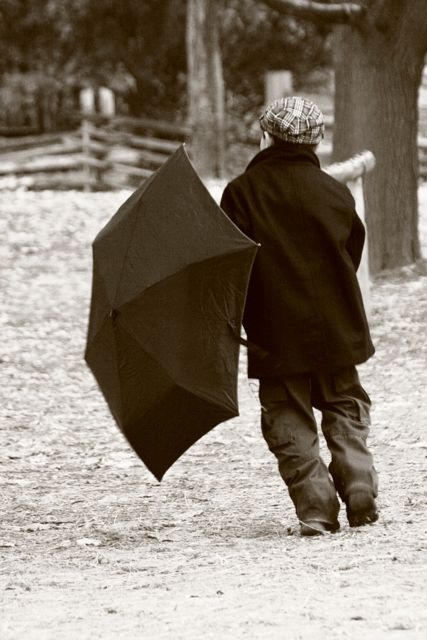
The colours are desaturated and warmed up a bit — gives the pics a nostalgic feel.

And I don’t know what comes first — faded pictures or faded memories.

Occasionally thoughts of my own childhood or my father’s family farm are dim as they’re replaced by more immediate and pressing and ultimately inconsequential challenges of the every day.

_MG_1454

This little fellow’s grandfather remembers the very day the Germans invaded his family’s hometown in northern Italy.

_MG_1462

My father always gives thanks for living in a country where freedom — religious, cultural, racial — is taken for granted.

_MG_1459

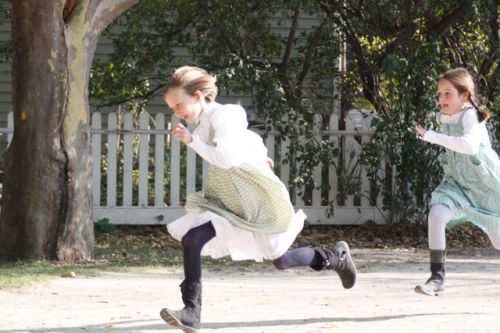
Where we watch our children romp without fear.

_MG_1513

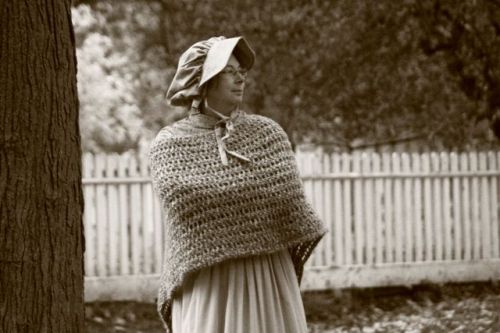
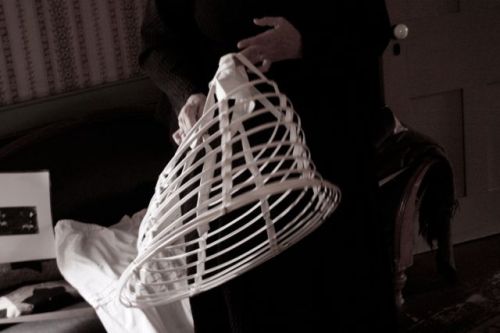
Where women’s clothing is a personal choice.

_MG_1496

Where evidence of our past has not been destroyed by deadly ordnance.

_MG_1490

Where the rain falls and the sun shines in balance.

_MG_1476

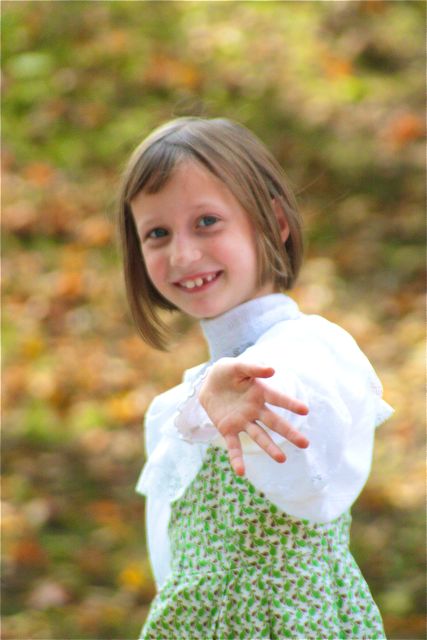
Where a child can be a child.

Amen, Dad.

When are you coming for a visit?

Stand by me

1

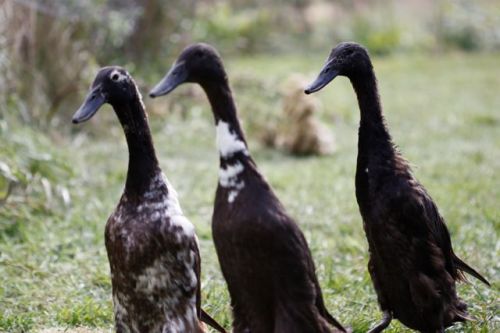
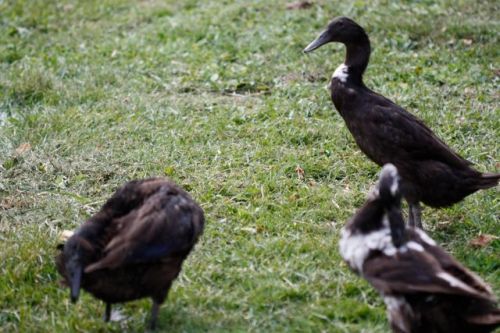
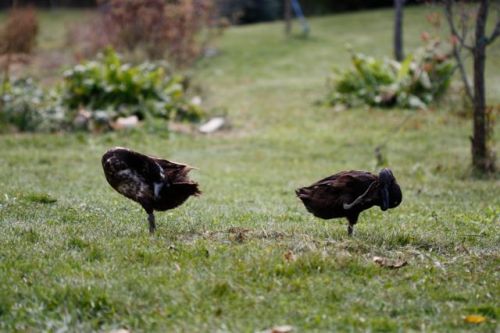
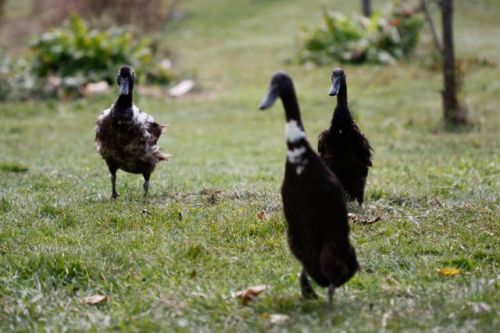
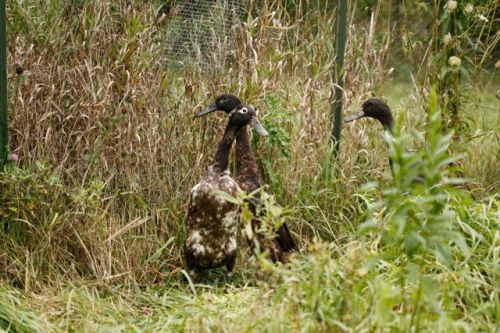
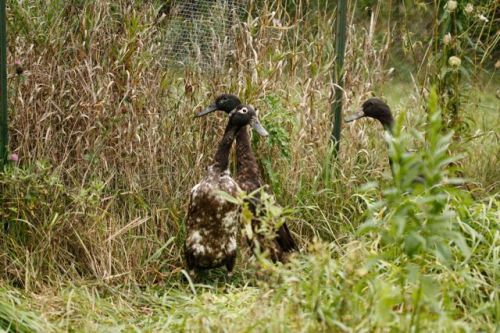
These Indian Runner ducks we have possess no individuality.

Plenty of personality but nothing unique to set them apart from the flock.

2

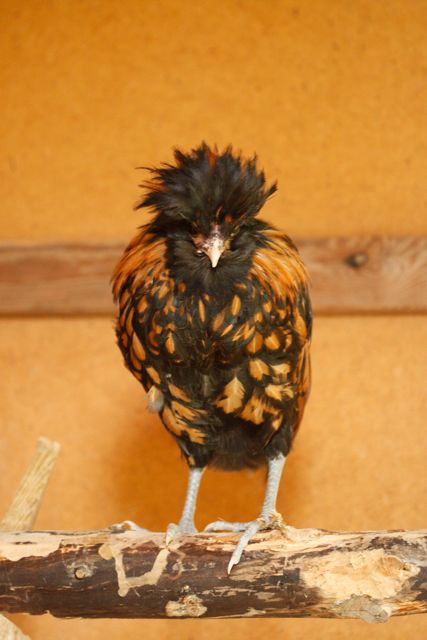
Our chickens, on the other foot hand (sorry), distinctly differentiate themselves from one another. Bossy, timid, tame, skittish — every hen and rooster has a distinct manner of behaviour within the flock. And as they all look different, it’s easy to tell who’s who.

3

Not so with the quackers.

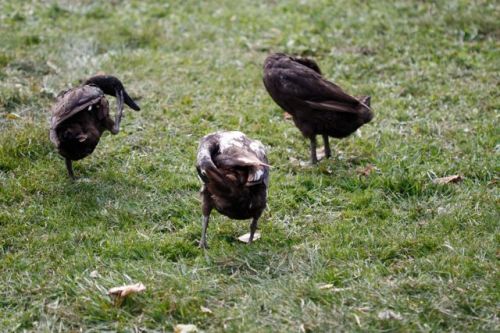
They all look different but it doesn’t matter. They think, move, eat and waddle as one giant peer group.

4

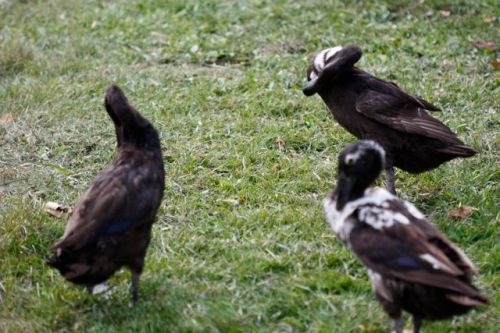
I put out a pan of water. One dunked her head. Another dunked her head. A third dunked his head.

5

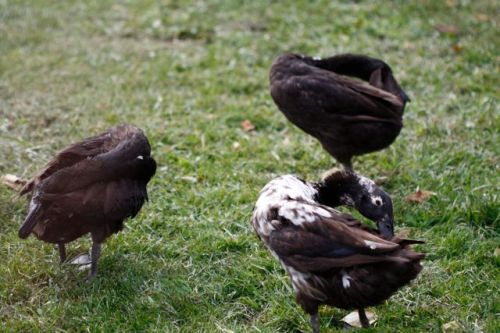
One started preening, rubbing her head on her back. The other two followed suit.

And it doesn’t take a lot of water to make them happy. A pan of water works, a puddle of water works, dew on the morning grass works, freshly fallen snow works. We have a pond but at present the pond has no appeal.

6

It’s a ducky-see ducky-do kind of world.

7 duck 2legs

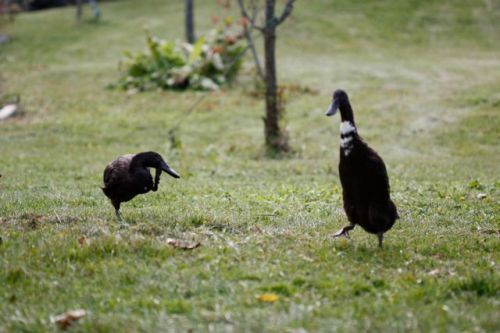
And they’re not competitive (Now, chickens? They’re competitive) as in, “I can stand on one leg which twisting my head backwards on to my back. Can you?”

No. It’s more like, “Hey, Doreen! Check out this new move from yoga! Twist your neck twice and put your head upside down under your wing and hold your breath.”

“Oh, honey, you’re so cute. Let’s go get a bite somewhere, okay?”

8

Always together, always supportive. Remind me of my aunt and uncle. A nice thought.

9

And now, a nice shake, a shiver from beak to tail, a rustle and a ruffle of feathers, a shimmy and a fluff and ahhhh.

10

On their way again.

“Come on, Doreen. Let’s go!”

Sign of a mother’s love

imagesWe have a new addition to our home.

Fully acoustic, non-digital, reverberating, pulsing, beating, thumping banging.

Loud.

It’s called a junior kit — oooooh, spe-shul as the offspring say — and I suppose I should be thankful for that.

Because:

images-1

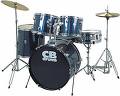
Because the future, dear reader, could resemble this.

Every morning, from 07h00 until 07h10 I hear

tap (rest) tap (rest) tap (rest) tap (rest)

tap tap tap tap tap tap tap tap

tap (rest) tap (rest) tap (rest) tap (rest)

tap tap tap tap tap tap tap tap.

Every morning.

_MG_1253

On Tuesday mornings, after the tap (rest) tap (rest) tap — oh never mind.

On Tuesdays mornings we hop in the car at 08h00 and arrive at school for a drum lesson with Mr. P.

_MG_1254

Mr. P is a fun guy and throws in a few tap tukka tap tukka tap tukka to liven things up.

And that’s just great because now I know I’ll have something new to look forward to each morning.

_MG_1255

Tap tukka tap tukka tap tukka tap tukka.

Gets the arms and legs moving early in the day.

Helps the princess rise from her slumber.

So far our abilities are confined to the snare and bass drums. Lawd a mercy when he starts on the cymbals!

_MG_1256

But Mr. P has big plans for our lad.

Today we hauled home an electric bass and an amp.

Mercy. That’s all I’m looking for. Mercy.

_MG_1285

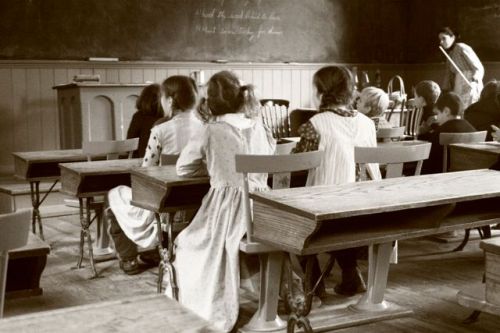
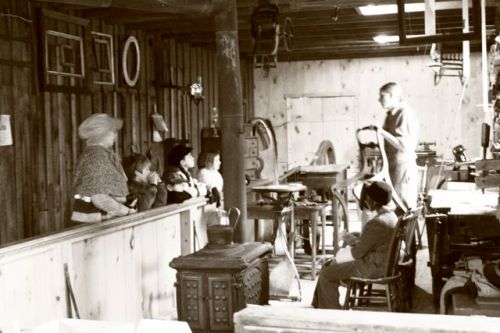
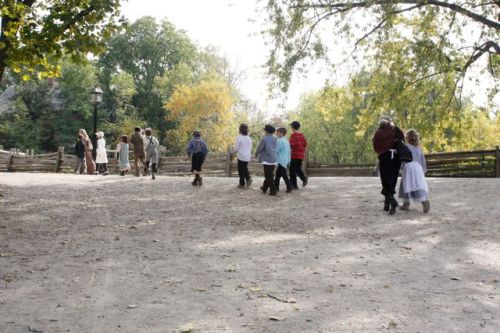
As part of their unit on the pioneers, the Grade 3 students of our school spend a week going to school and experiencing, as much as possible, life as a child of the 1860s.

After being dropped off in an empty parking lot by a big yellow school bus, the children scuffed their way down wooden sidewalks and dusty paths, passing a brewery, tinsmith shop, inn and general store.

Arriving at the century-old school house, they lined up — boys on one side, girls on the other, each with their own entrance.

_MG_1286

It was a cool autumn day but inside the school was warm, thanks to a cast-iron stove in the middle of the room.

_MG_1289

Inside, boys on one side, girls on the other.

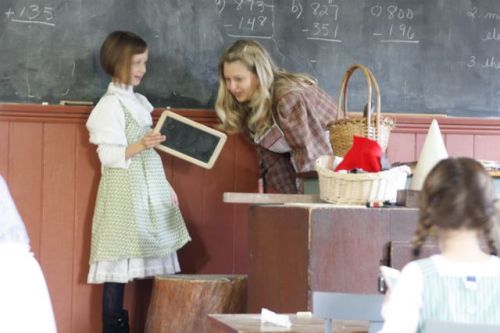
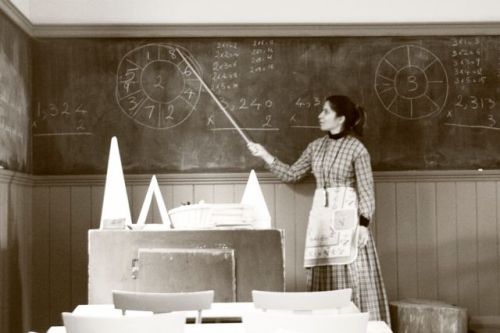
The teacher, our own Ms. K,  handed out slates and chalk for the day’s lessons, which she’d already written up on the chalk board.

Interestingly, our school has phased out its chalk boards — too many dust issues and sensitivities. White boards and erasable markers are now the norm.

_MG_1299

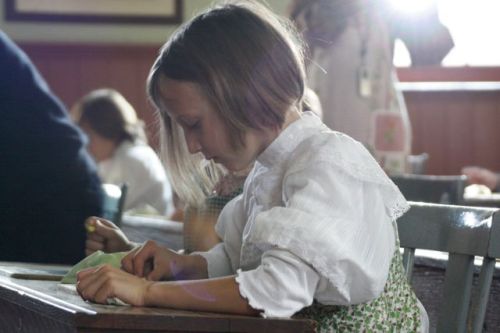
Any questions posed by the teacher had to be answered by first standing up and then speaking. Not sure what Missy is doing here away from her desk!

_MG_1304

Some clear benefits to being able to wipe away mistakes with your apron!

_MG_1330

On this day the classroom is quite bright and the light streams in through the large windows. One forgets how we maintain constant brightness in our offices and houses.

_MG_1342

After a tough morning of arithmetic and spelling the children are allowed a recess to burn off some of the bread and butter they made yesterday and ate today. The gals head over to see the horses, big draft animals, not like the racing breeds we see in the fields near our home.

_MG_1348

Back inside it’s time for grammar. In a startling contrast with what they’re experiencing this week, next week for three days the Grade 3 students will take a CAT (Canadian Aptitude Test) test, a somewhat stressful regimen that’s a tad controversial ’round these parts.

But that’s for another time.

_MG_1368

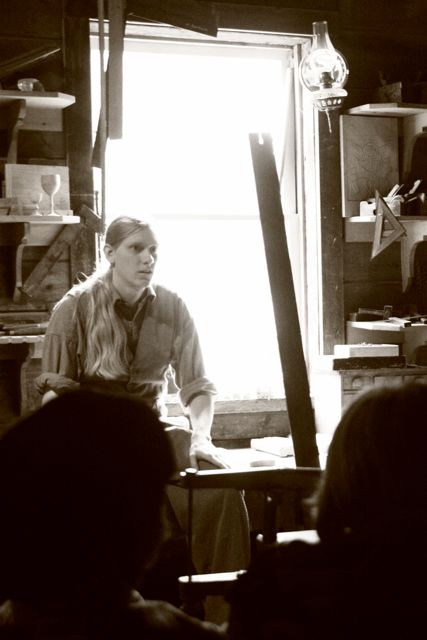
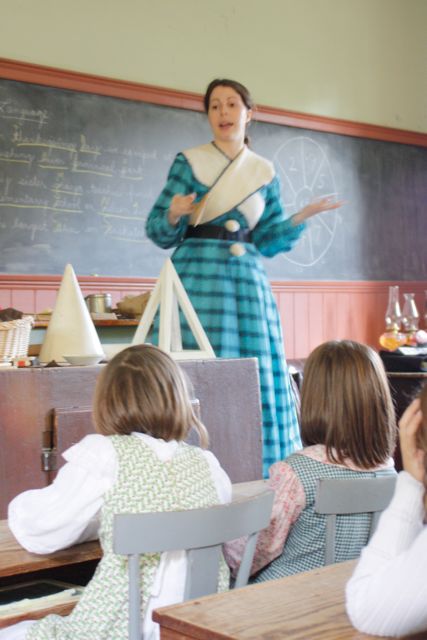
Shortly before lunch a bona fide exemplar of pioneer times clarifies terms such as artefact and museum for the children.

_MG_1380

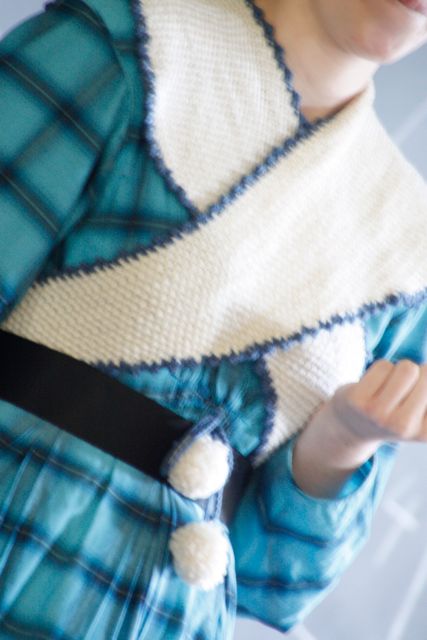
She sports a nifty little body warmer called a Hug Me Tight. Kinda cute.

_MG_1386

It’s the non-stop smiles that tell you this is learning that’s going to last a lifetime. Every one of these students will have a vibrant memory of the week they lived like children of a century ago

_MG_1391.

Heading back to the school bus and the 21st century.

And while it pains me to do so, I have to be honest to the whole experience.

Everybody had to dress up.

Everybody.

In the spring, for another school pioneer field trip, I wore my great-grandmother’s 1890s-era silk dress. That day was balmy and warm.

It’s now October. Somewhat cooler.

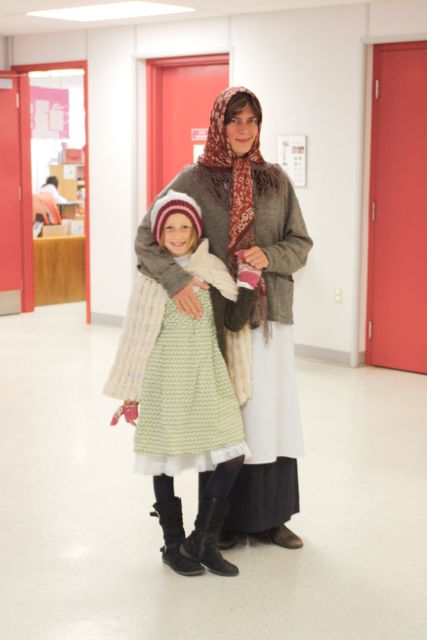
So I decided to be a little truer to my *other* family’s roots — not the one with the china, upright grand piano and good posture.

_MG_1257

I decided I would honour those family members who arrived in Canada by steamship carrying with them not much more than hope, faith, and a love for the land.

The similarity is striking.

All I’m missing is my immigration card.

Learning where you came from

_MG_1119

Every year the Ontario Grade 3 curriculum features an extended unit on Canadian pioneers.

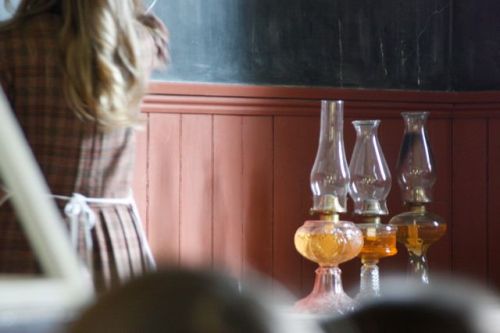
Children learn about the various challenges and physical hardships faced by early settlers — food, shelter, climate, predators, disease and isolation. The children learn that clothes fastened sans zippers and velcro, that late-night lighting was a pleasure reserved for the long days of summer and that pioneer children laboured long and hard for the rare luxury that might cross their paths.

But neither was all dark and austere.

To show some of the brighter elements of life in early Canada, our school takes the Grade 3 students to a week of study at Black Creek Pioneer Village, a working farm and 1800’s-era village at Toronto’s northern edge.

The village is typical of those established in south central Ontario between the 1790s and the 1860s. In those days, moving water was the engine that turned the mill wheels of rural Canada, grinding grain and providing a focal point for young communities.

With the mill perched at the side of a stream it wasn’t long before stores, a tavern and a blacksmith shop were built nearby. Houses, churches and a school quickly followed.

_MG_1121

On today’s field trip the children learned their maths arithmetic lesson using slates and chalk.

They churned butter, carded wool and patted some sheep.

Tomorrow to the blacksmith’s shop and preparation for a spelling bee.

No plastic allowed in the lunch basket,  no heating in the school house — the teacher had to start a fire, no Gore-Tex, no Thinsulate, no polypropylene fleece.

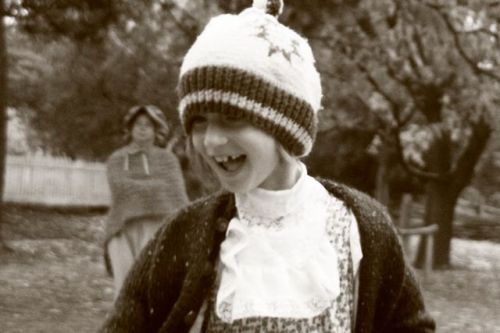
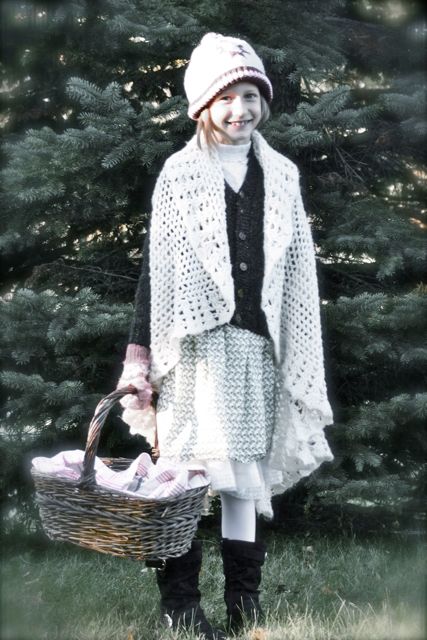
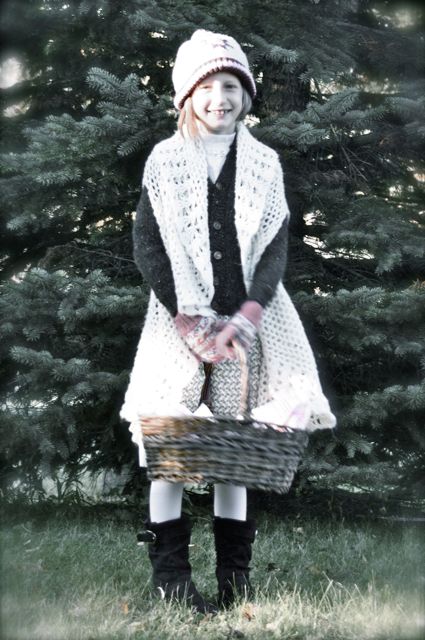
Missy here is wearing my brother’s 1967 woollen sweater, my mother’s shawl, alpaca mittens from South America, an undershirt, long stockings, socks and a mess of thrift store finds.

A new-wave kind of pioneer kid.

My girl.

Grounded!

Dad's visit May 09 - 20

Our chickens live a good — if somewhat truncated — life.

Their home-on-the-range lifestyle allows them plenty of room to forage and explore.

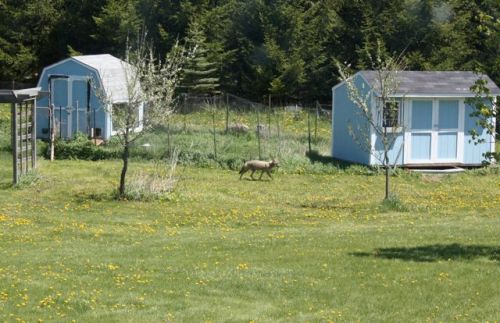
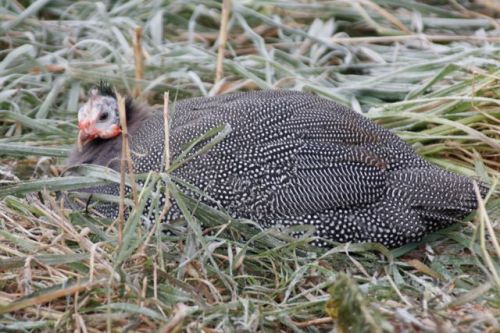
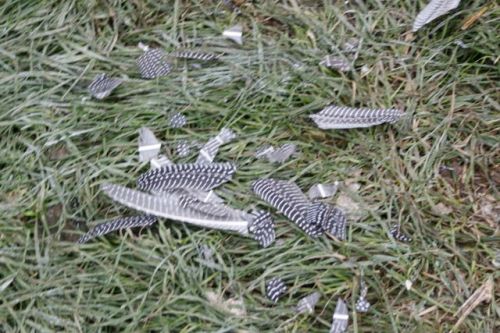
Señor Coyote, as pictured above in this springtime portrait, knows well the delights of the all-you-can-eat free-range buffet and has cleaned us out to the very last feather more than once.

_MG_0954

At various times we’ve contained and corralled, cornered and coerced our feathered friends attempting to keep them a little closer to home.

Inevitably, they fly the coop.

_MG_0905

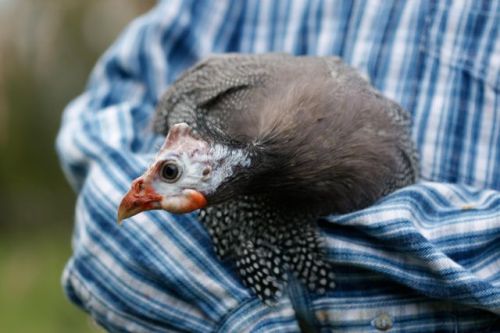
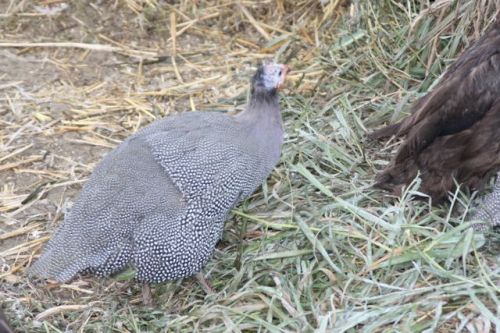
And these wild-eyed weirdos are particularly prone to upward mobility, soaring over our standard-issue five-foot-high chicken wire fence.

But no more.

IMG_1091

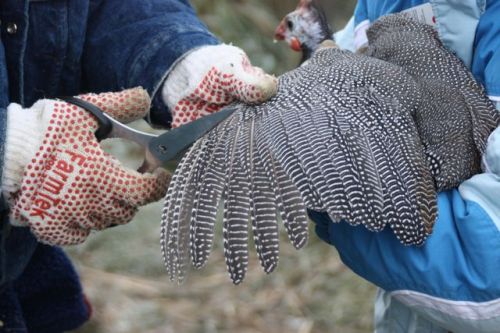
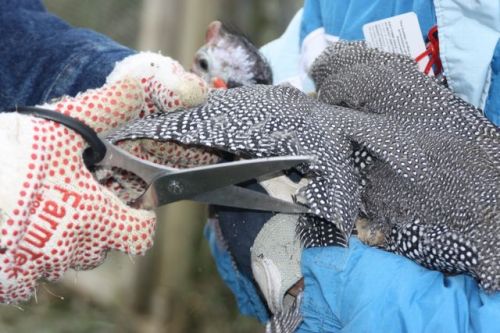
For today’s lesson, class, we are going to seriously ground these vertical vagabonds. Please prepare a pair of sharp scissors, get a firm grip on your subject, and —

The process sounds more ghastly than it is.

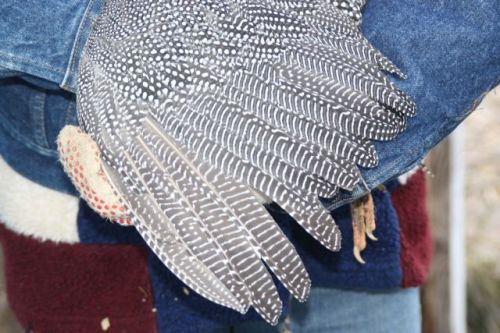
Fowl (and feel free to try this on your cockatiel) have a couple of sets of feathers, one of which is used for flight.

It is those primary feathers that we will be removing today.

IMG_1094

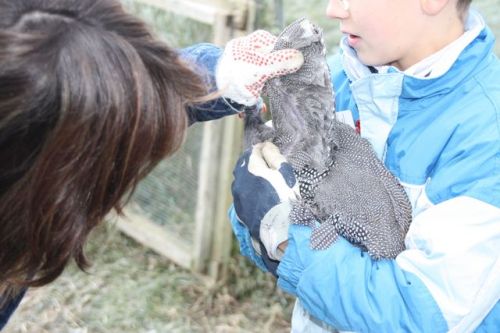
First of all, you will need to take a deep breath.

Second, ensure your assistant has a firm grasp on the customer. Remember, it’s like a haircut.

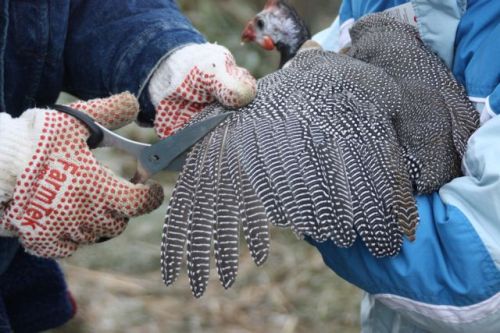
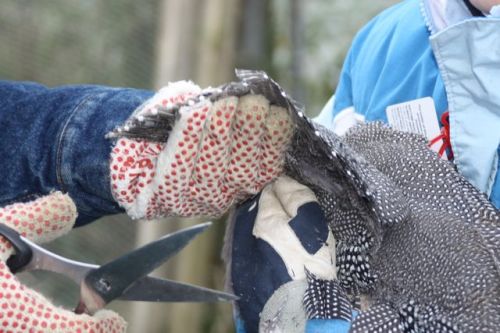
Spread out the bird’s wing, and — *snip*.

IMG_1095

That first *crunch* is a bit unnerving but you’ll notice, La Poule doesn’t appear to have noticed.

IMG_1096

A little farther along, all appears well.

IMG_1097

A nice clean line, just the way my mother used to cut my bangs.

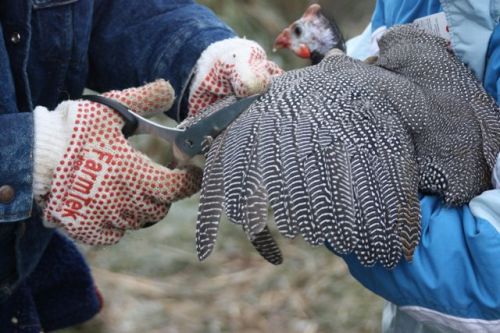
IMG_1099

Some extra trimming to make the trip worthwhile.

With my schedule it is *such* a bother to make regular trips to the salon.

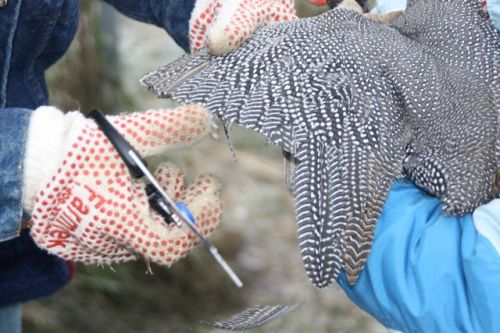
IMG_1100

Nice clean ends mean a good cut.

If these ends were bloody — not good. That would have meant we’d cut a blood feather, one that is still connected to the bird’s circulatory system.

As feathers grow, they are nourished through the bird’s blood supply via a very thin vein that runs through the shaft. If a blood feather’s shaft becomes broken the whole shaft must be removed to stop the bleeding.

But we’re all fine and dandy here. No blood.

IMG_1102

All your primary flight feathers have been removed, ma’am.

IMG_1109

Yup, reminds me a lot of getting my bangs cut.

By the way, we clipped only one wing. The theory is that with one wing clipped, the bird will be imbalanced and not able to get airborne.

With two wings clipped

maybe

(flap flap)

if I just flap harder

(flap flap-flap flap)

and faster

(flap-flap flap-flap-flap)

I might get over

(flapflapflap)

the fence

(flapflapflap)

after all!

(flapflapflapflap flapflapflap)

_MG_1114

Whew! I’m exhausted just thinking about it.

_MG_1118

That reminds me. Need to call to get my hair cut this week.

What a difference a day makes

Flights into Winnipeg last night were cancelled from both east and west. The snow caught everyone off guard.

My brother’s flight from Calgary was beginning its descent when the pilot announced they were turning back.

The plane landed in Regina and Brent passed a couple of hours in one of the capital city’s drinking establishments.

Two flights out of Toronto got half way to Winnipeg and then turned back.

It’s not so much that there is a lot of snow (there isn’t) but rather that no one was prepared for it, especially the airports.

But.

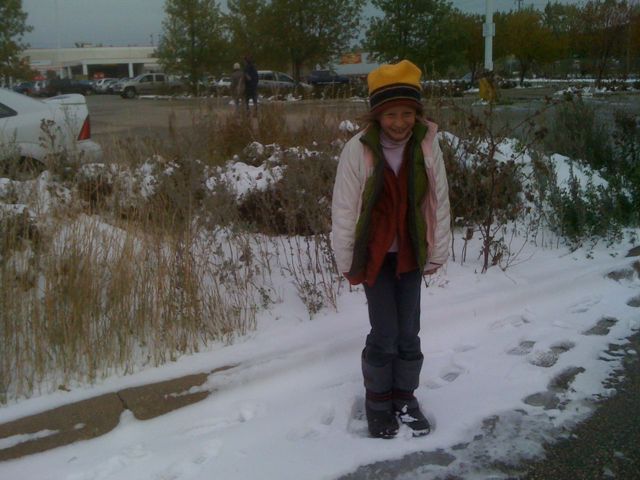
Snow. Children.

Magic.

2009 001

Coming in from the east, Manitoba’s flat expanse is a joy of similitude.

No rises or falls, hills or valleys, little beyond the straight, flat endless prairie.

It’s a sameness that’s hard on newcomers but for the prairie soul, it’s a study in minimalist beauty.

2009 047

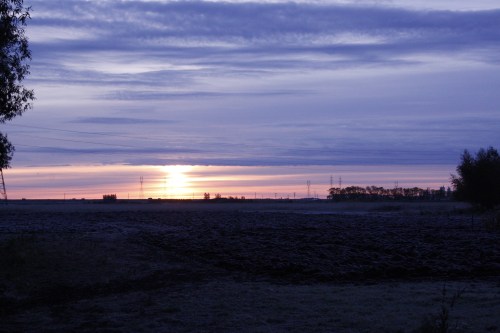
Early this morning the sun rose from its usual post in the east, piercing through the heavy clouds that portend the weather to come.

2009 038

But who cares about the snow?

You can always find somewhere warm to curl up.

_MG_0939

Introducing new birds into the an existing flock requires understanding, patience and a strong constitution.

New members are, after all, outsiders and intruders and should be driven away to protect the integrity of the feathered unit.

So the first thing to do is lock everyone up together for a few days.

Nobody gets out.

_MG_0940

It’s good for the new kids because they can ascertain their position on the roost. They can thumb their beaks at the original members and cackle, “Ha! You thought you owned the rung! Well it’s mine now, chickie!”

_MG_0945

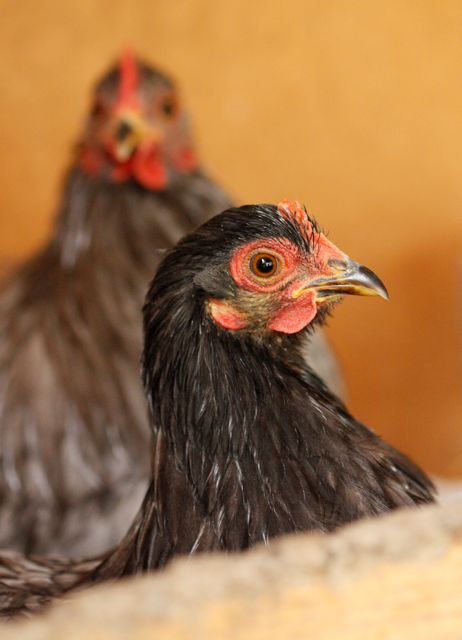
These Blue Cochins, survivors of an original group of five, are less than thrilled about the new kids and keep to themselves, watching, studying.

_MG_0952

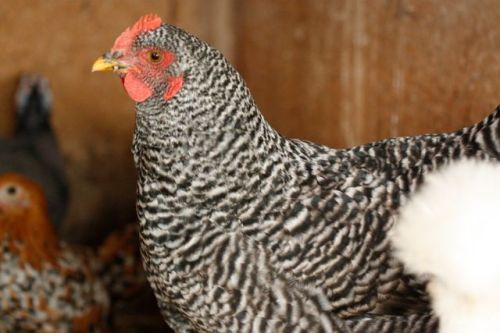
This Barred Rock is the last of an original group of seven. We had a large group in the spring which experienced some particularly bad luck from marauding mammals.

Barred Rocks are an old heritage breed — not hybrids — and are what’s called dual-purpose. Eggs and meat.

And she’s been queen of the flock for the last several months. *Not* happy about the intruders.

She’ll get over it because she’s outnumbered.

But it’s hard to watch the goings-on as they work out their family issues. It’s a feathered roller-derby in the there — peck, chase, challenge, gouge, claw… they don’t actually manage to peck out each other’s eyes but they give it a good effort.

_MG_0934

So sometimes you just have to turn away, shut the door, take a deep breath and focus on something without sharp edges.

_MG_0954

aaaaahhhhhhhh.